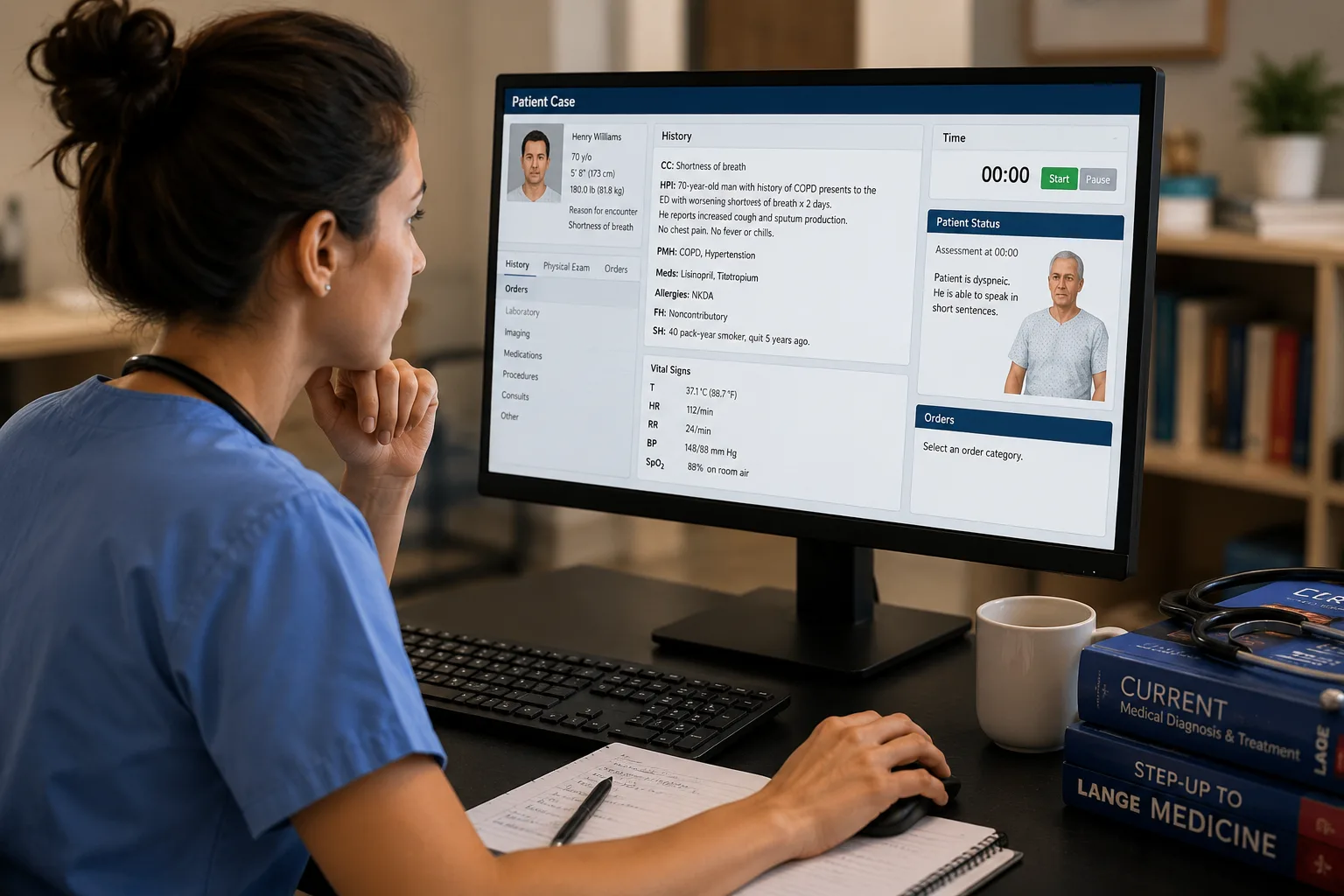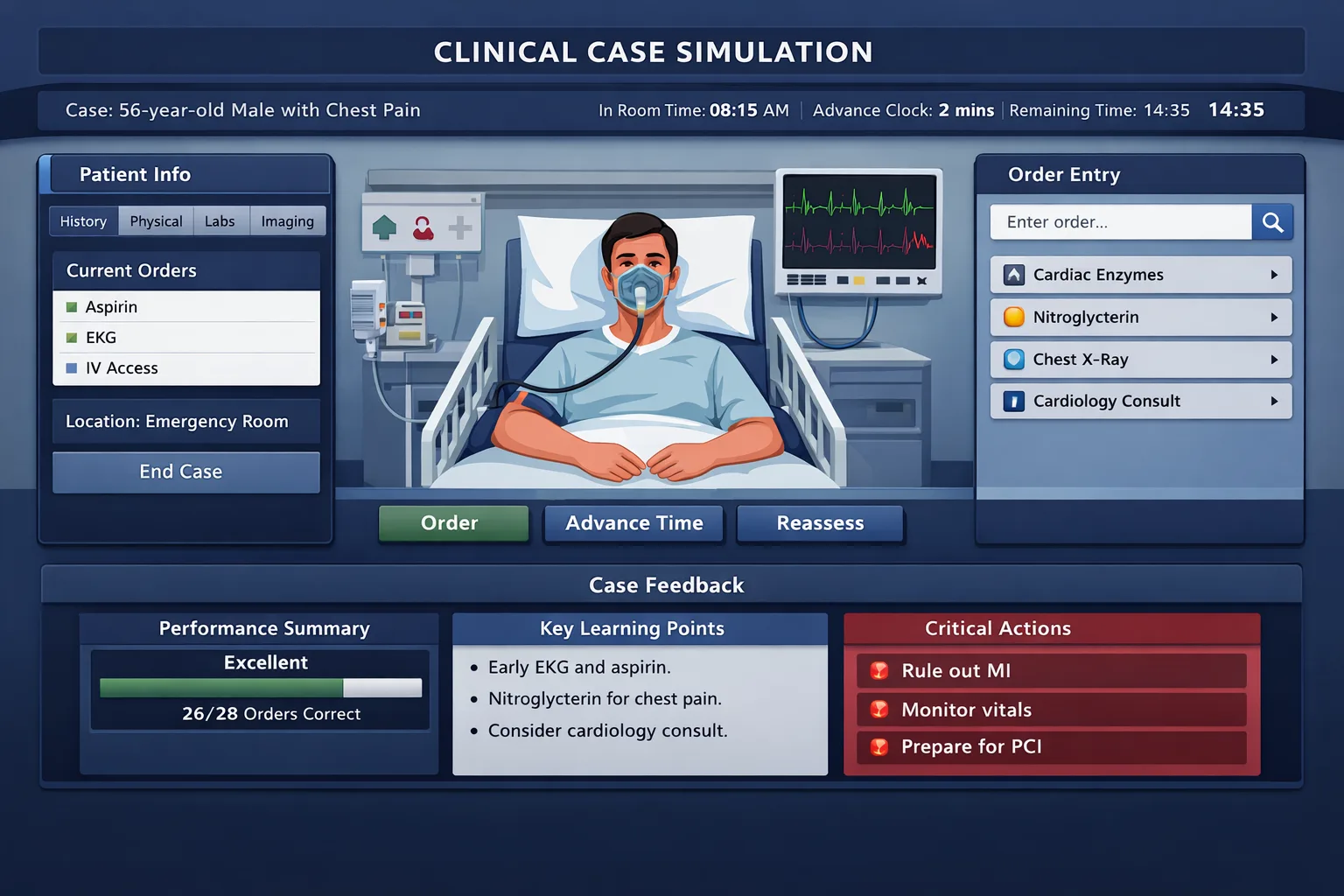
A strong Step 3 CCS order strategy is not a memorized shotgun list. It is a disciplined sequence: stabilize first, order targeted diagnostics, treat the likely dangerous condition, monitor response, reassess, then close with prevention and counseling. This article explains how to place labs, imaging, treatment, and monitoring orders in CCS cases without missing the actions that make a simulated patient improve.
Think Like the CCS Software: Orders Must Change the Patient
Computer-based case simulations reward clinical actions that are timely, appropriate, and sequenced with the patient’s location and acuity. The most common error is treating the order screen like a shopping cart. Students enter every lab they know, advance the clock, and hope the case improves. CCS does not reward noise. It rewards decisive clinical management that matches the presentation. A patient with crushing chest pain needs an electrocardiogram, cardiac monitoring, oxygen if hypoxemic, aspirin if acute coronary syndrome is likely and no contraindication exists, troponin testing, pain control, and rapid escalation when ST-elevation is present. A stable outpatient with fatigue needs a focused physical exam, targeted labs, and follow-up. The order set must fit the case.
The first principle is that orders should answer one of four questions. Is the patient safe right now? What dangerous diagnosis must be ruled in or out first? What treatment prevents deterioration while the workup continues? What monitoring proves that your plan is working? If an order does not answer one of these questions, it may still be useful, but it should not distract from the first minutes of the case.
Location matters. The emergency department is appropriate for unstable chest pain, altered mental status, respiratory distress, major trauma, septic shock, stroke symptoms, gastrointestinal bleeding, and severe abdominal pain with peritoneal signs. The intensive care unit is appropriate when the patient requires vasopressors, invasive ventilation, close neurologic monitoring, severe electrolyte correction, or unstable postoperative care. The office is appropriate for preventive visits, chronic disease follow-up, uncomplicated medication adjustment, and stable complaints. On the exam, moving a sick patient to a higher level of care can be as important as ordering a medication.
The second principle is sequence. In a real hospital, you do not wait for a complete metabolic panel before treating anaphylaxis, hypoglycemia, opioid overdose, sepsis with shock, airway compromise, ventricular tachycardia, or suspected meningitis with clinical instability. In CCS, the same logic applies. Stabilizing orders come first, followed by diagnostic confirmation and definitive treatment. For a hypotensive patient with fever, lactate and cultures are important, but fluids and empiric antibiotics are not optional. For a patient with suspected stroke, fingerstick glucose is urgent because hypoglycemia can mimic focal neurologic deficit. For a woman of reproductive age with abdominal pain, pregnancy testing is not trivia. It changes imaging choices and management.
Finally, do not forget to cancel harmful ongoing orders. CCS cases can begin with active medications. If the patient is taking warfarin and presents with intracranial hemorrhage, you should stop anticoagulation and reverse it when indicated. If a patient develops acute kidney injury, nephrotoxins and renally cleared drugs may need review. If a patient is pregnant, teratogenic medications and unnecessary radiation require attention. The order sheet is a management tool, not a passive record.
First-Minute Orders: Stabilization Before Diagnosis
The safest way to begin a CCS case is to decide whether the patient is unstable. Unstable means any threat to airway, breathing, circulation, neurologic function, or immediate organ perfusion. The first-minute order set is not the same for every patient, but the categories are predictable. Place the patient in the correct setting, support oxygenation, establish access, monitor vital functions, check bedside glucose when mental status is abnormal, and treat life-threatening findings immediately.
For respiratory distress, use pulse oximetry, oxygen, cardiac monitoring, intravenous access, chest radiograph when appropriate, arterial blood gas or venous blood gas when ventilation or acid-base status matters, and disease-specific therapy. Wheezing with asthma or chronic obstructive pulmonary disease suggests bronchodilators and systemic corticosteroids. Pulmonary edema suggests nitrates when blood pressure allows, diuretics, noninvasive ventilation when appropriate, and evaluation for ischemia. Tension pneumothorax is a clinical emergency. Do not wait for imaging when the vignette gives hypotension, severe dyspnea, unilateral absent breath sounds, and tracheal deviation. Decompression is the intervention that changes the patient.
For circulatory instability, order large-bore intravenous access, isotonic crystalloid when hypovolemia or distributive shock is likely, blood type and crossmatch when hemorrhage is possible, complete blood count, metabolic panel, lactate when shock or sepsis is possible, coagulation studies, and continuous monitoring. If sepsis is likely, blood cultures should be collected before antibiotics when this does not delay therapy. Broad-spectrum antibiotics and source control should follow quickly. Vasopressors belong in refractory hypotension after fluids, typically with ICU-level care.
For altered mental status, never begin with exotic diagnoses. Order fingerstick glucose, pulse oximetry, cardiac monitoring, intravenous access, complete blood count, metabolic panel, calcium or magnesium when indicated, toxicology screen if the history supports it, urinalysis when infection is plausible, pregnancy test when relevant, electrocardiogram for toxicologic or cardiac causes, and head CT when trauma, focal deficit, anticoagulation, seizure, severe headache, or concern for bleeding exists. Treat reversible causes immediately. Give dextrose for hypoglycemia. Give naloxone for opioid toxicity with respiratory depression. Give thiamine before glucose when Wernicke risk is clinically plausible, but do not delay treatment of severe hypoglycemia.
| Presentation | Immediate monitoring | Core labs | Early treatment | Common trap |
|---|---|---|---|---|
| Chest pain | Cardiac monitor, pulse oximetry, serial vitals | Troponin, CBC, BMP, PT/INR if anticoagulation likely | Aspirin if ACS likely, nitrates when appropriate, reperfusion pathway for STEMI | Waiting for troponin before acting on STEMI |
| Sepsis or shock | Continuous vitals, urine output, ICU if unstable | CBC, CMP, lactate, cultures, ABG or VBG when needed | Crystalloid, broad antibiotics, source control, vasopressors if refractory | Ordering cultures but delaying antibiotics |
| Altered mental status | Pulse oximetry, cardiac monitor, neurologic checks | Glucose, CMP, CBC, toxicology when indicated | Dextrose, naloxone, airway support, empiric therapy when infection likely | Missing bedside glucose |
| Severe abdominal pain | Vitals, IV access, urine output if ill | CBC, CMP, lipase, LFTs, lactate, pregnancy test | NPO, fluids, analgesia, antibiotics if perforation or infection suspected, surgery consult when indicated | Giving analgesia too late or skipping pregnancy test |
Analgesia is not a sign of weakness. CCS is a patient-care simulation. If a patient has renal colic, acute fracture, pancreatitis, myocardial ischemia, or postoperative pain, treat pain while you evaluate. Do not mask poor clinical reasoning with undertreatment. Antiemetics, antipyretics, fluids, and appropriate comfort measures often belong in the same early order sequence.
Lab Orders: Build a Diagnostic Backbone, Then Add Case-Specific Tests
Laboratory ordering in CCS should be broad enough to detect dangerous conditions but narrow enough to show clinical judgment. A practical structure is to start with the diagnostic backbone, then add organ-specific and exposure-specific tests. The backbone often includes complete blood count, basic or comprehensive metabolic panel, urinalysis, pregnancy test for patients of reproductive potential, and electrocardiogram when symptoms or age make cardiac disease plausible. This is not mandatory for every case. It is a default thinking pattern. A healthy patient in clinic asking for smoking cessation counseling does not need a trauma panel. An unstable patient does.
CBC helps with infection, anemia, thrombocytopenia, bleeding, hemolysis, malignancy clues, and perioperative risk. BMP or CMP helps with renal function, sodium, potassium, bicarbonate, glucose, liver injury, and medication safety. Urinalysis helps with urinary tract infection, hematuria, nephrolithiasis, proteinuria, dehydration clues, and diabetic ketoacidosis when ketones are present. A pregnancy test changes management in abdominal pain, pelvic pain, syncope, vomiting, trauma, medication decisions, and imaging choices. In CCS, omitting pregnancy testing is a common preventable error.
Add cardiac biomarkers when ischemia, myocarditis, demand injury, heart failure exacerbation, pulmonary embolism, renal failure with chest discomfort, or concerning dyspnea appears. Order troponin serially if acute coronary syndrome is part of the differential. Add BNP when heart failure is plausible, but remember that BNP does not replace examination, chest imaging, oxygenation assessment, and response to diuresis or vasodilator therapy. Add coagulation studies when bleeding, liver failure, anticoagulant use, stroke thrombolysis evaluation, major surgery, trauma, disseminated intravascular coagulation, or invasive procedures are relevant.
For infection, cultures should match the suspected source. Blood cultures are useful in sepsis, endocarditis, meningitis, osteomyelitis, febrile neutropenia, and severe pneumonia. Urine culture belongs with pyelonephritis, complicated urinary infection, pregnancy with urinary symptoms, or sepsis with urinary source. Sputum culture is not routine for every cough, but it is more useful in severe pneumonia, immunocompromise, hospital-acquired infection, or failure of outpatient treatment. Cerebrospinal fluid studies follow lumbar puncture when meningitis or subarachnoid hemorrhage is suspected and imaging is not required first or has already been done.
For endocrine and metabolic presentations, order targeted tests. Diabetic ketoacidosis suggests serum or urine ketones, venous blood gas, anion gap, electrolytes, serum osmolality when hyperosmolar state is possible, and frequent potassium and glucose checks. Thyroid storm or myxedema coma suggests TSH and free thyroxine, but treatment should not wait when the clinical picture is severe. Adrenal crisis suggests cortisol and ACTH if they can be obtained quickly, but steroids and fluids are the action that prevents collapse. Rhabdomyolysis suggests creatine kinase, renal function, potassium, calcium, phosphate, urinalysis, and aggressive fluids when appropriate.
For abdominal pain, think by region and organ system. Lipase for pancreatitis. Liver tests and bilirubin for hepatobiliary disease. Lactate for shock, ischemic bowel, sepsis, or severe abdominal catastrophe. Stool testing for severe diarrhea with fever, blood, travel, immunocompromise, or recent antibiotics. Type and crossmatch for gastrointestinal bleeding, ruptured ectopic pregnancy, trauma, aortic catastrophe, and operative abdomen. Do not order every test for every belly pain. Match tests to the most dangerous plausible diagnoses.
Stop treating CCS like a memorized order list.
Practice the sequence: stabilize, diagnose, treat, reassess, and close the case without shotgun orders.
Correct orders still need the right order.
- Stabilize first
- Order what changes care
- Reassess before advancing time
Imaging Orders: Choose the Study That Answers the Clinical Question
Imaging in CCS is high value when it answers a specific clinical question and changes management. It is low value when it is ordered because the student feels uncertain. The exam often tests whether you can choose ultrasound, computed tomography, magnetic resonance imaging, radiography, or no imaging based on acuity, pregnancy status, contrast safety, and pretest probability. The right order includes the right modality, body area, contrast decision, and urgency.
Chest radiography is appropriate for many respiratory complaints, suspected pneumonia, pneumothorax, pulmonary edema, rib injury, line placement, and undifferentiated dyspnea. It is not a universal screening test. For acute chest pain, chest radiograph can help evaluate pulmonary and aortic clues, but it does not replace electrocardiogram or troponin. For suspected aortic dissection, CT angiography of the chest, abdomen, and pelvis is often the decisive study in a stable patient, while transesophageal echocardiography or operative management may be more relevant when unstable. CCS rewards recognizing the emergency and consulting the right service early.
Ultrasound is especially important in pregnancy, pelvic pain, right upper quadrant pain, biliary disease, testicular torsion, ovarian torsion, abdominal aortic aneurysm screening in selected contexts, and bedside assessment in shock when available. A woman of reproductive age with lower abdominal pain needs pregnancy testing before radiating imaging when possible. If ectopic pregnancy is plausible, pelvic ultrasound and obstetrics or gynecology consultation matter. If testicular torsion is suspected, do not let ultrasound delay urologic intervention when the clinical presentation is classic and severe.
CT is commonly used for acute abdomen, appendicitis in many adults, diverticulitis with complications, renal colic, pulmonary embolism, intracranial hemorrhage, trauma, and many vascular emergencies. Contrast decisions matter. CT pulmonary angiography evaluates pulmonary embolism when indicated. Noncontrast head CT is first-line for suspected acute intracranial hemorrhage. Noncontrast CT of the abdomen and pelvis is often used for nephrolithiasis. CT abdomen and pelvis with intravenous contrast is often more useful for appendicitis, diverticulitis complications, abscess, ischemia concerns, or malignancy staging, depending on renal function and allergy context. The exam rarely rewards indiscriminate pan-scanning in stable patients without an indication.
MRI is valuable when soft tissue, neurologic, spine, biliary, musculoskeletal infection, or posterior circulation concerns require better detail and the patient is stable enough to obtain it. MRI brain helps with ischemic stroke characterization after initial emergency management. MRI spine is important for epidural abscess, cord compression, cauda equina syndrome, and malignancy with neurologic deficit. MRCP may help biliary obstruction when ultrasound and labs point toward ductal pathology. MRI is often not the first order in an unstable emergency because it takes time and may not be available quickly in the simulation.
| Clinical clue | Imaging choice | Why it matters in CCS |
|---|---|---|
| Sudden neurologic deficit | Noncontrast head CT first | Excludes hemorrhage before reperfusion decisions |
| Right upper quadrant pain, fever, Murphy sign | Right upper quadrant ultrasound | Detects gallstones, cholecystitis, and biliary dilation |
| Pleuritic chest pain, hypoxemia, high PE suspicion | CT pulmonary angiography if appropriate | Confirms embolism and guides anticoagulation or escalation |
| Back pain with fever and neurologic deficit | MRI spine | Finds epidural abscess or cord compression needing urgent action |
| Pelvic pain with positive pregnancy test | Transvaginal pelvic ultrasound | Evaluates ectopic pregnancy and intrauterine pregnancy |
One of the most important imaging skills is knowing when not to wait. In CCS, unstable patients can deteriorate during clock advancement. If the diagnosis is clinical and the intervention is lifesaving, treat first. Tension pneumothorax, anaphylaxis, status epilepticus, hypoglycemia, opioid overdose with respiratory depression, and unstable hemorrhage are not imaging puzzles. They are action cases.
Treatment Orders: Start Empiric Care When Delay Is Dangerous
Treatment orders are where many CCS cases are won or lost. Diagnostic accuracy matters, but the simulated patient improves because the correct therapy begins. The safest rule is to treat immediately when the risk of delay exceeds the risk of empiric therapy. This applies to sepsis, meningitis, anaphylaxis, hypoglycemia, status epilepticus, opioid toxicity with respiratory depression, acute coronary syndrome, unstable arrhythmia, severe asthma exacerbation, diabetic ketoacidosis, gastrointestinal hemorrhage with shock, ectopic pregnancy with instability, and surgical abdomen.
For suspected acute coronary syndrome, the initial order pattern includes electrocardiogram, cardiac monitoring, troponin testing, aspirin when no contraindication exists, nitrates when blood pressure and medication history allow, statin therapy when ACS is likely, anticoagulation and antiplatelet escalation when indicated, and urgent reperfusion pathway for ST-elevation myocardial infarction. Do not let a normal first troponin falsely reassure you. Early troponin can be negative. The electrocardiogram and clinical syndrome drive immediate action.
For sepsis and septic shock, treatment includes intravenous crystalloids for hypotension or hypoperfusion, blood cultures before antibiotics when feasible, broad-spectrum antibiotics, lactate measurement and reassessment, source identification, source control, and vasopressors for persistent hypotension after fluids. The patient should be monitored closely, often in an ICU setting when shock is present. CCS cases may show improvement after appropriate antibiotics, fluids, drainage, removal of infected hardware, or surgical consultation. If the patient remains unstable, reassess rather than ordering more random tests.
For respiratory disease, match treatment to physiology. Asthma and COPD exacerbations need bronchodilators, systemic corticosteroids, oxygen titrated to the clinical target, and ventilatory support when tiring or hypercapnic. Pneumonia needs antibiotics that match severity and setting, oxygen if hypoxemic, fluids if septic, and admission when unstable. Pulmonary embolism may require anticoagulation, thrombolysis in selected unstable cases, or procedural therapy when massive PE causes shock. Heart failure exacerbation may need oxygen, nitrates when hypertensive, diuretics, noninvasive ventilation, and evaluation for ischemic triggers.
For abdominal emergencies, avoid the trap of waiting for every result before calling surgery. Peritonitis, perforation, bowel ischemia, appendicitis with complications, obstructed strangulated hernia, ruptured abdominal aortic aneurysm, unstable ectopic pregnancy, and acute cholecystitis with sepsis require early consultation. Supportive orders often include NPO status, intravenous fluids, analgesia, antiemetics, antibiotics when infection or perforation is likely, type and crossmatch when bleeding or surgery is likely, and procedure-specific preparation. If surgery is needed, ordering a fifth abdominal lab is not the priority.
For neurologic emergencies, time matters. Stroke evaluation requires rapid glucose check, neurologic assessment, noncontrast head CT, blood pressure strategy, and reperfusion eligibility assessment. Seizure requires airway protection, benzodiazepine therapy for active seizure, antiseizure loading when indicated, glucose and electrolytes, and cause evaluation. Meningitis requires blood cultures and antibiotics promptly, with dexamethasone when bacterial meningitis is suspected in appropriate contexts. Lumbar puncture is important, but antibiotics should not be delayed in a deteriorating patient.
Treatment orders also include stopping harmful exposures. Discontinue offending medications in drug reactions, serotonin syndrome, neuroleptic malignant syndrome, toxic ingestions, acute kidney injury, hyperkalemia, and bleeding. Hold anticoagulants for major bleeding. Reverse coagulopathy when indicated. Stop nephrotoxins in acute renal failure. Stop metformin in severe renal dysfunction or lactic acidosis risk. This is practical medicine, and CCS expects practical medicine.
Monitoring Orders: Prove Your Patient Is Getting Better
Monitoring is the bridge between ordering and clinical reasoning. Many students place the right initial orders but fail to watch the patient respond. CCS cases require you to advance the clock to receive results, observe vital signs, reassess symptoms, and adjust treatment. Monitoring orders are not decorative. They tell the simulation what you care about and when you want to know if the patient worsens.
Vital signs are central. Order frequent vitals for unstable patients, postoperative patients, active bleeding, sepsis, anaphylaxis, severe asthma, hypertensive emergency, arrhythmia, and medication titration. Continuous cardiac monitoring is appropriate for chest pain, syncope, electrolyte abnormalities, overdose, arrhythmias, heart failure exacerbation, pulmonary embolism, and critically ill patients. Pulse oximetry is appropriate for dyspnea, pneumonia, asthma, COPD, sedation, opioid exposure, pulmonary edema, pulmonary embolism, and procedural care. Urine output is important in shock, acute kidney injury, diabetic ketoacidosis, heart failure diuresis, rhabdomyolysis, sepsis, and postoperative care.
Serial labs are often more important than one-time labs. Diabetic ketoacidosis requires repeated glucose, electrolytes, anion gap, potassium, and acid-base assessment. Hyperkalemia requires repeat potassium and electrocardiogram monitoring after therapy. Gastrointestinal bleeding requires serial hemoglobin and hemodynamic monitoring. Sepsis with high lactate requires reassessment of perfusion and lactate trends. Anticoagulation requires appropriate monitoring depending on the agent. Renal failure requires repeated renal function and electrolyte checks. If you order insulin infusion, potassium monitoring is not optional. If you give diuretics, electrolytes and renal function matter.
Clinical reassessment matters as much as data. If a patient with asthma receives nebulized therapy and steroids, advance the clock a short interval and reassess breathing, oxygenation, respiratory rate, and ability to speak. If a patient with sepsis receives fluids and antibiotics, reassess blood pressure, heart rate, urine output, mental status, lactate, and oxygenation. If a patient with chest pain receives ACS therapy, repeat electrocardiogram and troponin when appropriate and respond to changes. Do not advance eight hours after critical orders unless the patient is stable and the clinical scenario supports that time jump.
Monitoring also prevents iatrogenic harm. Oxygen helps hypoxemia, but unnecessary oxygen in a stable patient is not the central issue. Opioids relieve pain, but oversedation requires respiratory monitoring. Anticoagulation treats PE and ACS, but bleeding risk requires reassessment. Fluids treat hypovolemia and sepsis, but heart failure patients may worsen with excess volume. Antibiotics treat infection, but cultures, source control, allergy review, and de-escalation thinking show mature management. CCS often shows deterioration when therapy is incomplete or mismatched.
| Therapy | Monitoring order | Reason |
|---|---|---|
| Insulin infusion | Frequent glucose and potassium, BMP, anion gap | Detects hypoglycemia, hypokalemia, and DKA resolution |
| IV fluids in shock | Vitals, urine output, lactate reassessment, lung exam | Confirms perfusion without missing overload |
| Diuretics | Urine output, BMP, daily weight if inpatient | Tracks decongestion and electrolyte injury |
| Anticoagulation | CBC, bleeding checks, drug-specific labs when applicable | Balances thrombosis treatment with hemorrhage risk |
| Antibiotics for severe infection | Vitals, cultures, renal function, clinical response | Assesses source control and toxicity risk |
On the MDSteps Platform, CCS practice is strongest when monitoring is built into the case workflow. Live vitals CCS Cases with timed orders and real physiology are designed to train the exact habit CCS rewards: place an order, advance time safely, interpret response, and adjust management before the patient deteriorates.
Consults, Procedures, Prevention, and Counseling Orders
Consults are not substitutes for management, but they are essential when a specialist action is required. A common CCS mistake is calling a consultant without stabilizing the patient. Another mistake is never calling the consultant after the workup confirms a procedural or operative diagnosis. The exam expects both. Stabilize first, then consult when the patient needs surgery, catheterization, endoscopy, dialysis, obstetric intervention, psychiatric safety evaluation, intensive care, or specialty-directed procedures.
Call cardiology for STEMI, high-risk NSTEMI, unstable arrhythmia, cardiogenic shock, pacemaker indications, or complex heart failure. Call surgery for peritonitis, appendicitis with complications, bowel obstruction with strangulation concern, perforation, necrotizing soft tissue infection, acute abdomen, trauma requiring operative evaluation, and uncontrolled bleeding. Call obstetrics and gynecology for ectopic pregnancy, ovarian torsion, severe pelvic infection, obstetric complications, and pregnancy-related emergencies. Call neurosurgery for intracranial hemorrhage, cord compression, cauda equina, epidural abscess with neurologic deficit, and severe traumatic brain injury. Call nephrology for urgent dialysis indications, severe refractory electrolyte derangements, and complex renal failure. Call psychiatry for suicidal ideation, homicidal ideation, psychosis with safety risk, severe substance use withdrawal planning, and capacity concerns.
Procedures should be ordered when they directly treat the condition or obtain essential diagnostic information. Examples include lumbar puncture for meningitis or subarachnoid hemorrhage evaluation after appropriate safety assessment, incision and drainage for abscess, chest tube for pneumothorax requiring drainage, paracentesis for ascites with suspected spontaneous bacterial peritonitis, arthrocentesis for suspected septic arthritis, endoscopy for significant gastrointestinal bleeding, dialysis for emergent indications, and catheterization for STEMI. In CCS, a consult may not automatically perform the procedure you need. You often need to order the procedure explicitly.
Prevention and counseling are easy points when they fit the case. Smoking cessation, alcohol counseling, substance use counseling, safe sex counseling, diet and exercise advice, medication adherence counseling, fall precautions, firearm safety when relevant, seat belt counseling, and domestic violence resources may be appropriate. Vaccines, cancer screening, contraception counseling, prenatal vitamins, diabetic foot care, retinal screening, statin therapy, blood pressure management, and follow-up appointments belong in stable outpatient or discharge phases when indicated. Do not place preventive orders while ignoring an unstable emergency. Timing is the issue.
Discharge planning is an order domain too. A patient with a new diagnosis may need follow-up, medication education, return precautions, home health, physical therapy, wound care, glucose monitoring supplies, blood pressure log, or specialist clinic follow-up. A patient with infection may need oral antibiotics, culture follow-up, renal dosing, and reassessment. A patient after myocardial infarction may need cardiac rehabilitation and risk factor modification. A patient after asthma exacerbation needs inhaler technique, controller therapy when appropriate, trigger avoidance, and follow-up. These orders show that you can complete the arc of care.
Preventive care should not become a memorized end-of-case dump. Give counseling and screening that match age, sex, pregnancy status, risk factors, chronic disease, and visit type. For example, smoking cessation belongs in many visits. Colon cancer screening belongs when the patient meets current screening criteria and the setting is appropriate. Vaccination review belongs in preventive care, chronic disease visits, pregnancy-related care, and discharge planning when relevant. CCS cases are short, but they still test whether you think beyond the immediate diagnosis.
Rapid-Review Checklist for CCS Orders
Use this final checklist during practice until the pattern becomes automatic. The goal is not to memorize every possible order. The goal is to build a reliable sequence that prevents dangerous omissions. When a case opens, identify location, acuity, organ system, and the first life-threatening diagnosis. Then place orders that stabilize, diagnose, treat, monitor, and close the case safely.
Stabilize
- Correct location: ED, ward, ICU, office, operating room.
- Airway, oxygen, pulse oximetry, cardiac monitor when indicated.
- IV access, fluids, blood products, bedside glucose, pain control.
- Treat immediate threats before waiting for confirmatory tests.
Diagnose
- CBC, BMP or CMP, urinalysis, pregnancy test when relevant.
- ECG and troponin for chest pain, syncope, dyspnea, high-risk patients.
- Cultures, lactate, ABG or VBG for sepsis or shock.
- Imaging that answers the clinical question.
Treat
- Empiric therapy when delay is dangerous.
- Stop harmful medications or exposures.
- Consult when procedure, surgery, ICU, dialysis, or specialty care is needed.
- Order definitive procedures explicitly.
Monitor and close
- Serial vitals, urine output, repeat labs, and symptom checks.
- Advance the clock in clinically safe intervals.
- Adjust treatment based on response.
- Discharge only when stable with follow-up, counseling, and prevention.
The most testable CCS pattern is stabilize, diagnose, treat, monitor, reassess, and prevent. If you miss orders repeatedly, group the misses by category. Did you forget monitoring after insulin? Did you delay antibiotics? Did you skip pregnancy testing before imaging? Did you consult but forget the procedure? Did you treat but forget disposition? These patterns are more important than any single missed lab.
For Step 3 examinees, the best practice routine is case-based. Complete a timed case, write down every missed order, convert each miss into a rule, and repeat the rule in the next similar case. For example, “DKA equals insulin plus potassium surveillance,” “GI bleed equals type and crossmatch plus serial hemoglobin,” “sepsis equals cultures if feasible, antibiotics, fluids, lactate, source control, reassessment,” and “pelvic pain equals pregnancy status first.” This is how CCS orders become automatic under pressure.
When using MDSteps Step 3, pair timed CCS cases with the analytics and exam readiness dashboard. Review the missed-order categories, then use the automatic study plan generator to prioritize weak systems. This turns CCS preparation from passive case exposure into deliberate performance correction.
Exam-Day Essentials
- Read the opening location and vitals before ordering.
- Move unstable patients to the appropriate level of care.
- Order stabilization, treatment, and monitoring before advancing time.
- Use pregnancy testing, renal function, allergies, and contraindications to guide orders.
- Do not delay life-saving empiric treatment for perfect diagnostic certainty.
- Reassess after every major intervention.
- Call consults when a specialist action is needed, not as a replacement for your own orders.
- Finish stable cases with counseling, prevention, follow-up, and safe disposition.
References
- United States Medical Licensing Examination. Computer-based Case Simulations.
- United States Medical Licensing Examination. Step 3 Common Questions.
- United States Medical Licensing Examination. Step 3 Formats and Questions.
- Gulati M, Levy PD, Mukherjee D, et al. 2021 AHA/ACC Guideline for the Evaluation and Diagnosis of Chest Pain. J Am Coll Cardiol. 2021.
- Evans L, Rhodes A, Alhazzani W, et al. Surviving Sepsis Campaign: International Guidelines for Management of Sepsis and Septic Shock 2021. Society of Critical Care Medicine.
- American College of Radiology. ACR Appropriateness Criteria.
- Centers for Disease Control and Prevention. Adult Immunization Schedule Addendum.
- MDSteps. Sample Question Breakdown for Clinical Reasoning.
Medically reviewed by: Elena Ramirez, MD, FACP