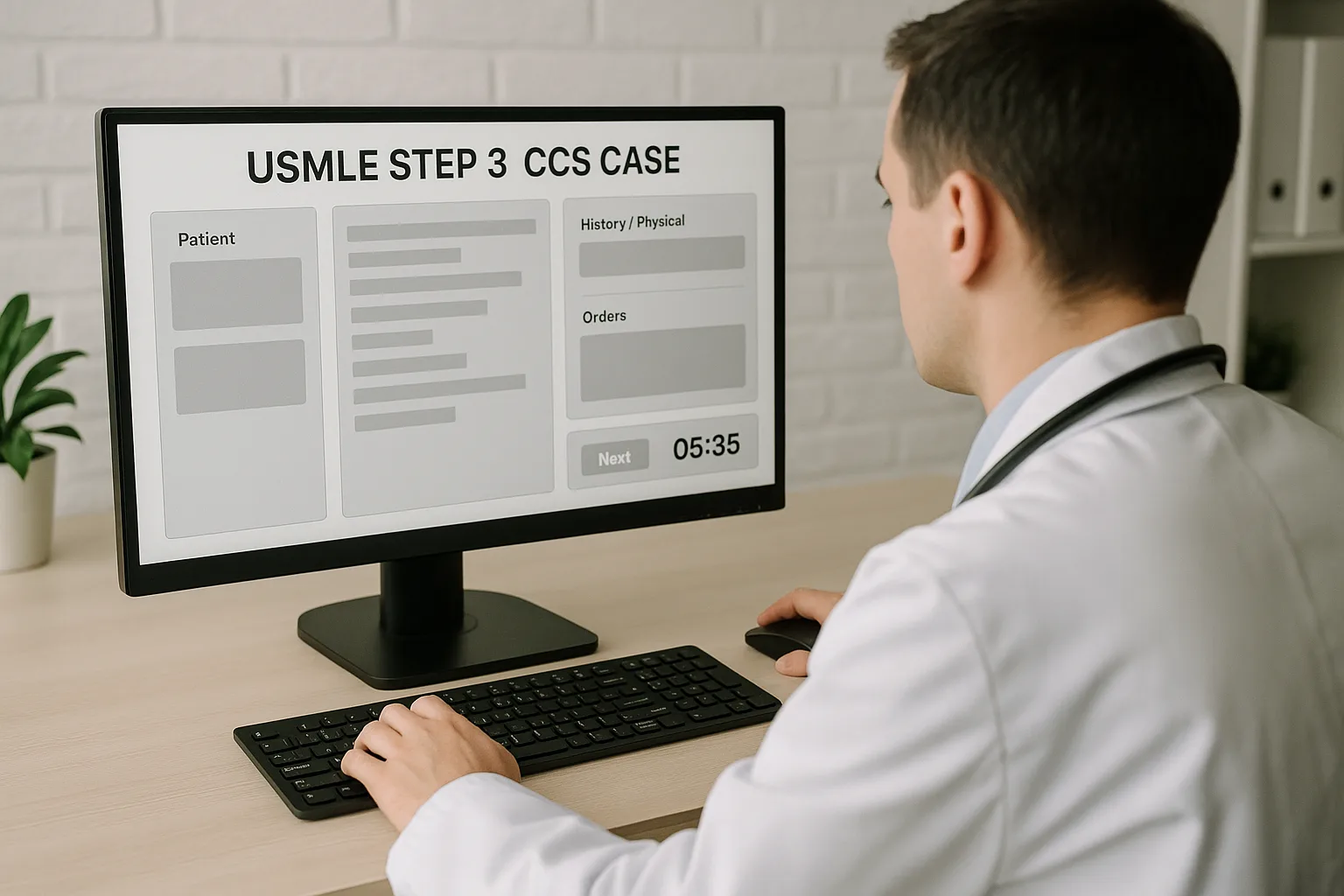
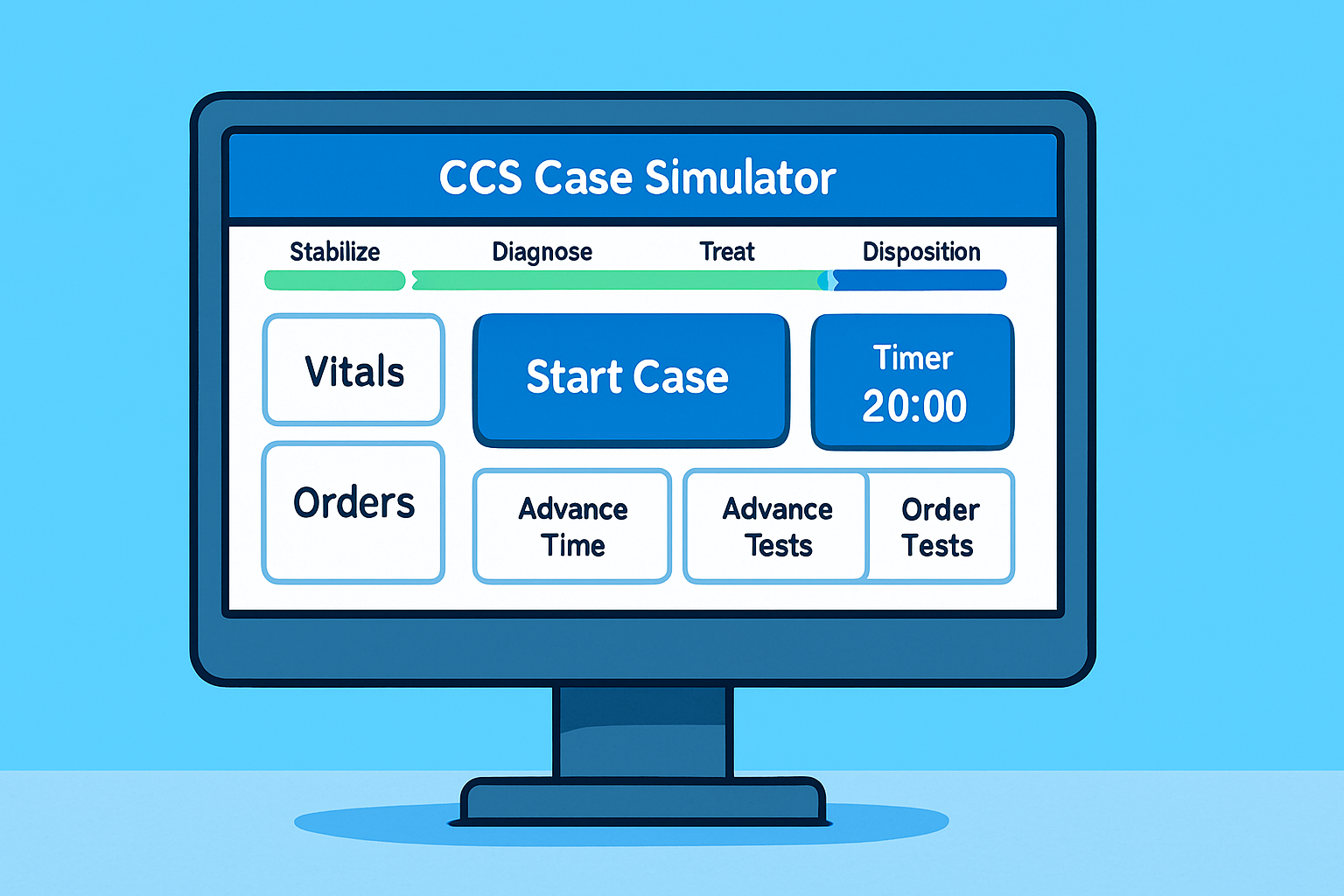
USMLE Step 3 Strategy A strong Free 137 Step 3 review should do more than produce a percentage. It should show whether your errors come from knowledge gaps, timing, clinical judgment, or the transition from multiple-choice reasoning to CCS management. The Step 3 sample questions are best used as a diagnostic assessment, not as a prediction instrument. The official USMLE sample materials include more than 100 Step 3 questions and an interactive testing experience, and the sample booklet itself notes that reviewing questions is not a substitute for becoming familiar with the test software. That distinction matters. A candidate can know a topic and still lose points because the interface, timing, item format, or answer-selection discipline feels unfamiliar. Start by treating the result as a map of decision quality. The question you should ask is not, “Was my percentage good enough?” The better question is, “What type of physician task did I fail to execute?” Step 3 is designed for an as-yet undifferentiated physician who must make safe, independent decisions. This means many items reward practical clinical judgment rather than isolated recall. A missed question about acute chest pain may reflect poor risk stratification, not lack of cardiology knowledge. A missed question about antibiotic selection may reflect failure to identify severity, source control, pregnancy status, renal function, or localizing clues. Score review should begin under realistic conditions. Use timed blocks, avoid pausing for explanations, and mark items only when you truly need to return. After the block, record four numbers: total correct, number changed from correct to incorrect, number changed from incorrect to correct, and number guessed without a clear reason. These four data points tell you whether your main issue is knowledge, second-guessing, weak test-day rules, or inadequate time control. Do not overinterpret a single form. The Free 137 is not a comprehensive blueprint of every Step 3 domain. It is a sample of item style, reasoning level, and interface demands. Use it alongside your QBank performance, self-assessment results, and CCS practice. If the Free 137 exposes repeated misses in preventive care, prognosis, ethics, quality improvement, biostatistics, emergency stabilization, or outpatient follow-up, those patterns deserve attention because they often cross multiple organ systems. Finally, separate Step 3 Day 1 and Day 2 thinking. Day 1 often feels heavier in foundational science, epidemiology, ethics, and mechanisms. Day 2 emphasizes ongoing care, prognosis, management, and CCS readiness. A useful review labels each miss by whether it was a knowledge problem, a reasoning problem, or an execution problem. This prevents the common mistake of responding to every missed item by rereading a textbook chapter. Many Step 3 errors require a narrower fix: a triage rule, a treatment sequence, a contraindication list, or a CCS order pattern. The most common error after finishing the Free 137 is to calculate a percentage, compare it with online anecdotes, and move on. That approach wastes the most valuable part of the exercise. The review should classify each missed or uncertain item into a category that predicts what you should do next. Use five categories: content gap, clue misread, management sequence error, risk-benefit error, and testing mechanics. A content gap means you did not know the diagnosis, drug, guideline, organism, mechanism, or epidemiologic concept. A clue misread means the information was present, but you weighted the wrong detail. A management sequence error means you knew the diagnosis but selected the wrong next step. A risk-benefit error means you chose an action that was technically plausible but unsafe, premature, excessive, or insufficient. A testing mechanics error includes timing problems, answer switching, failure to read the last sentence, or missing the task asked by the stem. After labeling each miss, count the categories. A candidate with 12 content gaps and 2 sequencing errors needs a different plan than a candidate with 4 content gaps and 10 sequencing errors. The first candidate needs focused knowledge repair. The second needs practice converting clinical recognition into safe action. Also label uncertain correct answers. These are often hidden weaknesses. If you guessed correctly, treat the item as a partial miss. Step 3 rewards consistency under pressure. A lucky correct answer on a sample item can become a real miss on test day when the vignette changes one variable. For example, a stable outpatient with new atrial fibrillation differs from an unstable patient with hypotension. A pregnant patient with suspected pyelonephritis differs from a nonpregnant patient with uncomplicated cystitis. A patient with chest pain and ST elevation differs from a patient with low-risk atypical symptoms. These distinctions drive management. When you review explanations, avoid copying paragraphs. Write one reusable rule per error. A useful rule is short, conditional, and testable. Examples include: “If unstable, resuscitate before definitive diagnostic refinement,” “If screening is requested, match the test to age and risk,” and “If two answers treat the same disease, choose the one that addresses the immediate threat.” These rules transfer better than long notes. Weak-area analysis should combine organ system, physician task, and clinical setting. Organ system alone is too blunt. A “cardiology weakness” could mean poor ECG interpretation, weak heart failure pharmacology, missed emergency management, preventive care uncertainty, or inability to decide inpatient versus outpatient disposition. Each requires a different fix. Create a three-column review log. Column one is the clinical domain, such as cardiology, infectious disease, obstetrics, pediatrics, psychiatry, surgery, or preventive medicine. Column two is the task, such as diagnosis, prognosis, management, screening, counseling, ethics, quality improvement, or biostatistics. Column three is the missed decision. This format reveals patterns quickly. If most errors cluster in management and prognosis, more reading may not solve the problem. You need case-based practice and forced next-step reasoning. Step 3 often tests whether you can adapt a familiar diagnosis to a new context. A patient presents with dyspnea, but the correct answer may depend on pregnancy, postoperative status, malignancy, hemodynamic instability, renal failure, or medication exposure. Another patient presents with abdominal pain, but the next step changes with peritonitis, pregnancy, immunosuppression, age, or vascular risk. The weak area is not always the disease. It may be the modifier. You miss recurring presentations because the illness script is incomplete. You know the disease but miss how age, pregnancy, instability, or comorbidity changes the answer. You identify the diagnosis but choose a delayed, excessive, or unsafe intervention. Rank weak areas by consequence. A rare content miss may not deserve the same attention as repeated errors in emergency stabilization, antibiotic selection, anticoagulation, obstetric triage, pediatric fever, chest pain, altered mental status, or preventive screening. Step 3 is an exam of unsupervised clinical care. Unsafe decisions carry more educational weight than obscure misses. Use your Free 137 review to build a short priority list for the final study phase. Limit the list to three to five themes. Examples include “biostatistics interpretation,” “outpatient preventive care,” “acute management sequences,” “ethics and systems-based practice,” and “CCS order completeness.” A list longer than five usually becomes unfocused. The goal is not to relearn medicine. The goal is to close the gaps that are most likely to convert into points. This is where structured analytics can help. The MDSteps exam readiness dashboard and adaptive QBank can be used to compare missed-question themes against a larger pool of board-style items, then generate targeted practice and flashcards from repeated misses. The value is not more volume by itself. The value is fewer unclassified errors. Free 137 can show what you missed, but the real value comes from knowing why you missed it: content gap, management sequence, timing, distractor pull, or CCS readiness. MDSteps helps turn those misses into targeted Step 3 practice. A missed question becomes useful only when it changes future behavior. Passive review creates recognition. Test-day rules create retrieval. A test-day rule is a short instruction that tells you what to do when a similar pattern appears again. It should fit on one line and include the trigger, action, and exception when needed. For example, if you missed a question because you ordered a diagnostic test before stabilizing an unstable patient, the rule is not “review shock.” The rule is, “If the patient is unstable, choose the answer that stabilizes airway, breathing, circulation, or perfusion before diagnostic refinement.” If you missed a screening question, the rule is not “review preventive medicine.” The rule is, “For screening items, identify age, sex, pregnancy status, risk factor, prior result, and interval before choosing the test.” Rules should be written in your own words. They should not copy the explanation. They should reduce the next vignette to an actionable decision. The best rules are durable across specialties. “Treat first when delay is dangerous” applies to sepsis, status epilepticus, anaphylaxis, tension pneumothorax, hyperkalemia with ECG changes, and unstable arrhythmia. “Do not screen when symptoms are present” applies across preventive medicine and diagnostic reasoning. “Choose the least invasive effective test when stable” can prevent overtesting in outpatient scenarios. After each block, select the five highest-yield rules. Do not create 40 flashcards from one review session. Too many cards dilute attention. Prioritize rules that correct repeated patterns, prevent dangerous actions, or apply across multiple topics. If you missed a rare enzyme deficiency, that may deserve a brief note. If you missed unstable patient management, that deserves immediate practice. Use a “wrong answer autopsy” for close calls. Ask why the tempting answer was wrong. Was it too invasive? Too late? Too broad? Too narrow? Correct for the wrong setting? Correct diagnosis but wrong next step? Correct treatment but contraindicated? Step 3 often offers answers that are medically true but contextually wrong. The exam rewards context control. Connect every rule to either MCQ performance or CCS behavior. A rule about unstable asthma should become both a multiple-choice answer pattern and a CCS order sequence: oxygen, pulse oximetry, beta-agonist therapy, systemic corticosteroids, consideration of magnesium in severe cases, monitoring, and escalation when needed. A rule about diabetic ketoacidosis should become fluids, electrolytes, insulin timing, monitoring, precipitant evaluation, and safe disposition. This transfer is where Step 3 preparation becomes efficient. The Free 137 does not replace CCS practice, but it can expose the reasoning habits that determine CCS performance. The official USMLE CCS guidance emphasizes familiarity with the CCS software and background information. That matters because CCS tests not only what you know, but how you manage time, orders, patient movement, reassessment, and disposition. When reviewing each management item, ask how the same patient would behave in a case simulation. What initial orders would be necessary? What monitoring is required? Which treatments should begin immediately? Which diagnostic tests should not delay stabilization? What interval history or physical examination would change management? When would you advance the clock? When would you admit, discharge, transfer, counsel, or arrange follow-up? Build CCS readiness from MCQ misses by converting diagnoses into order bundles. The goal is not to memorize a script for every disease. The goal is to create safe management habits. For acutely ill patients, the first bundle is stabilization: airway, breathing, circulation, IV access, oxygen when indicated, cardiac monitoring when appropriate, fluids or vasopressors when clinically justified, and urgent treatment for time-sensitive threats. The second bundle is diagnostic confirmation. The third is targeted therapy. The fourth is reassessment. The fifth is disposition and counseling. Practice CCS cases after reviewing the Free 137, not before, if the sample revealed major management gaps. Otherwise, you may simply repeat unsafe habits in the simulator. For each weak topic, run one related CCS case and write a short post-case note: omitted orders, harmful orders, delayed reassessment, missed counseling, and disposition errors. This is more useful than tracking only the case score. For Step 3-specific CCS practice, MDSteps CCS cases provide live vitals, timed orders, and real physiology, which can help candidates connect Free 137 management errors to simulated patient care. Use this kind of practice to rehearse order timing, not just order recall. Your post-review plan should be short, specific, and linked to the exam date. A common mistake is to respond to a disappointing Free 137 result by restarting broad content review. That rarely works late in preparation. Instead, convert the error log into a two-week or four-week repair plan. The plan should include targeted QBank blocks, rule review, biostatistics practice, ethics and quality improvement review, and CCS cases. Use mixed blocks for assessment and focused blocks for repair. If you identified a clear weakness in obstetric emergencies, infectious disease management, renal electrolyte decisions, or preventive care, use a short focused set to rebuild the framework. Then return to mixed timed blocks to test transfer. A focused block can create false confidence if it is not followed by mixed practice. Schedule CCS practice several times per week. Do not leave it until the final days. CCS requires interface fluency, order timing, and comfort advancing the clock. Many candidates underperform because they know what to do clinically but hesitate in the software. The official guidance recommends practicing with the CCS software before test day, and that recommendation should be treated as a required part of preparation. For candidates balancing residency, the plan must be realistic. A tired intern after a 12-hour shift is unlikely to benefit from a full-length block plus detailed review. Use smaller units on clinical days: 15 to 20 questions, one CCS case, or a 30-minute rule review. Save longer timed blocks for days when fatigue will not distort the result. The MDSteps Step 3 study tools can support this process by generating a structured plan, tracking readiness, and turning missed questions into exportable flashcards. Use automation to reduce organizational friction, but keep the final responsibility on reasoning quality. The final phase of Step 3 preparation should sharpen decision-making. It should not create new confusion. Several traps appear repeatedly after candidates complete the sample questions. The first trap is chasing explanations from too many sources. Free explanations can be helpful, but inconsistent wording, outdated details, or anecdotal score correlations can distract from the official purpose of the sample materials. Use external explanations only to clarify reasoning. Do not let them replace your own error log. The second trap is treating every missed item equally. Missing a rare mechanism question is not the same as missing sepsis management, unstable arrhythmia, acute abdomen, postpartum hemorrhage, suicidal ideation, child abuse recognition, or anticoagulation contraindications. Give priority to errors that affect patient safety, emergency stabilization, disposition, or common outpatient care. The third trap is reviewing only the correct answer. Step 3 often tests why the wrong options are wrong. A distractor may be appropriate in a different time frame, a different setting, or a different stability level. Train yourself to verbalize the reason each close distractor fails. This improves future item discrimination and reduces answer switching. The fourth trap is neglecting biostatistics and ethics because they feel disconnected from patient management. These topics can be high-yield because they are testable across specialties and often depend on method rather than memorization. For biostatistics, practice interpreting study design, bias, confidence intervals, relative risk, odds ratios, number needed to treat, sensitivity, specificity, and predictive values. For ethics and systems-based practice, focus on patient autonomy, informed consent, confidentiality, capacity, surrogate decision-making, quality improvement, and medical error disclosure. The fifth trap is postponing CCS until after MCQ confidence improves. CCS is not a reward for finishing question review. It is a parallel skill. The patient simulation requires practice with order entry, reassessment, time advancement, and closure. A candidate who waits too long may know the medicine but lose efficiency because the interface feels awkward. Another trap is failing to simulate the physical rhythm of Step 3. The exam spans two days, with different emphases. Build stamina by doing timed work in blocks and practicing transitions. Review hydration, food, breaks, and sleep. A strong knowledge base can be undermined by poor pacing and fatigue. Finally, avoid score folklore. Online reports may not match your background, exam timing, resources, or clinical experience. Use the Free 137 as one data point. Combine it with your QBank trend, self-assessment trend, CCS performance, and error classification. If all indicators point to the same weakness, act on it. If one result conflicts with the others, investigate rather than panic. Use this checklist during the final study phase after completing the Step 3 sample questions. Keep it visible while reviewing blocks and CCS cases. On exam day, read the final line before committing to an answer. Identify the setting, stability, time course, and task. Ask whether the question wants diagnosis, next step, treatment, prognosis, prevention, ethics, or interpretation. If the patient is unstable, prioritize stabilization. If the patient is stable, choose the action that most directly changes management. If two answers seem correct, choose the one that fits the timing and setting. For CCS, begin with safety. Order monitoring and stabilization when appropriate. Do not advance the clock before urgent interventions are active. Reassess after key results or treatments. Avoid shotgun orders that do not fit the presentation. Close the case with disposition, counseling, follow-up, and prevention when clinically appropriate. The final goal is not perfection. It is safer, faster, more consistent clinical reasoning. The sample questions show where your current approach breaks down. Your review should convert those breakdowns into rules, practice sets, order habits, and a final plan. Medically reviewed by: Daniel R. Morales, MDInterpret the Free 137 as a Diagnostic Tool
Convert a Raw Percentage Into Actionable Categories
Error Category
Typical Clue
Best Repair
CCS Link
Content gap
You could not explain the correct answer after review.
Targeted review plus 10 to 20 related QBank items.
Add missing diagnostic or treatment orders to a checklist.
Clue misread
You knew the topic but ignored the decisive detail.
Create a “pivot clue” rule in one sentence.
Practice recognizing severity, setting, and time course.
Management sequence
You diagnosed correctly but chose the wrong next step.
Write stabilize, diagnose, treat, disposition sequence.
Convert sequence into CCS orders and time advancement.
Risk-benefit
Your answer was possible but not safest.
Review contraindications, urgency, and invasive thresholds.
Avoid harmful orders and premature discharge.
Testing mechanics
You missed due to pacing, switching, or task confusion.
Use a block rule and final-line verification.
Practice CCS software navigation before exam week.
Find Weak Areas Without Overreading the Score
Pattern Weakness
Modifier Weakness
Action Weakness
Do not just review your Free 137 score. Find the pattern behind the misses.
A percentage alone does not tell you what to fix.
Turn Missed Questions Into Test-Day Rules
Use the Free 137 to Prepare for CCS Cases
MCQ Finding
CCS Question to Ask
Order Habit to Build
Missed emergency next step
What must be done before testing?
Stabilization, monitoring, urgent treatment.
Missed outpatient follow-up
What counseling and follow-up are required?
Education, risk reduction, return precautions.
Missed diagnostic confirmation
Which test changes management now?
Focused labs, imaging, cultures, or procedures.
Missed disposition
Can this patient safely leave?
Admit, observe, ICU, transfer, or discharge plan.
Build a Focused Study Plan After the Review
Day Range
MCQ Focus
CCS Focus
Output
Days 1 to 3
Review error log and repair top 2 content gaps.
Run 2 cases linked to missed management topics.
10 reusable rules.
Days 4 to 7
Mixed timed blocks with final-line verification.
Practice emergency and inpatient cases.
Order checklist and timing notes.
Days 8 to 11
Biostatistics, ethics, prognosis, prevention.
Practice outpatient and counseling-heavy cases.
Disposition and counseling checklist.
Days 12 to 14
Timed mixed review, no broad rereading.
Software fluency and case sequencing.
Final rapid-review sheet.
Avoid Common Traps in Final Step 3 Preparation
Rapid-Review Checklist and References
Exam-Day Essentials
References
USMLE Step 3
Free 137 Step 3: How to Review Your Score, Find Weak Areas, and Prepare for CCS

For Free 137 Step 3 review
Free 137 tells you what you missed. MDSteps helps show why you missed it.
After Free 137, the next move is not just reading explanations. The next move is figuring out whether your misses came from management logic, timing, clue recognition, distractor pull, or CCS-style decision sequencing.
Full access includes Step 3 QBank practice, CCS cases, analytics, auto-flashcards, and study planning.
Miss-pattern review
See whether the miss came from the topic, the clue, the timing, or the answer-choice trap.
Step 3 management logic
Practice treatment, monitoring, reassessment, prevention, and follow-up decisions.
CCS readiness bridge
Use CCS cases to test whether your management plan works when orders, timing, and reassessment matter.
High-yield principle: A mediocre score with clear error patterns is more useful than a higher score reviewed passively. The purpose is to build a repair plan.
Finished Free 137?
Step 3 miss-pattern check
Step 3-style reasoning reviewManagement and timing trapsCCS readiness check
Start with a free Step 3 reasoning review. Full access includes Step 3 QBank practice, CCS cases, analytics, flashcards, and study planning.
After Free 137
Still missing the same kinds of questions?
Read why that happens.
Missed item: Identify the exact decision that failed.
Error label: Content, clue, sequence, risk-benefit, or mechanics.
Reusable rule: Write one conditional sentence.
Practice transfer: Apply the rule to 5 related questions or 2 CCS cases.
Retention: Convert the rule into a flashcard or checklist item.
Final-week warning: Do not introduce a large new resource unless a specific gap requires it. In the final week, consistency beats novelty.
Rapid-Review Checklist