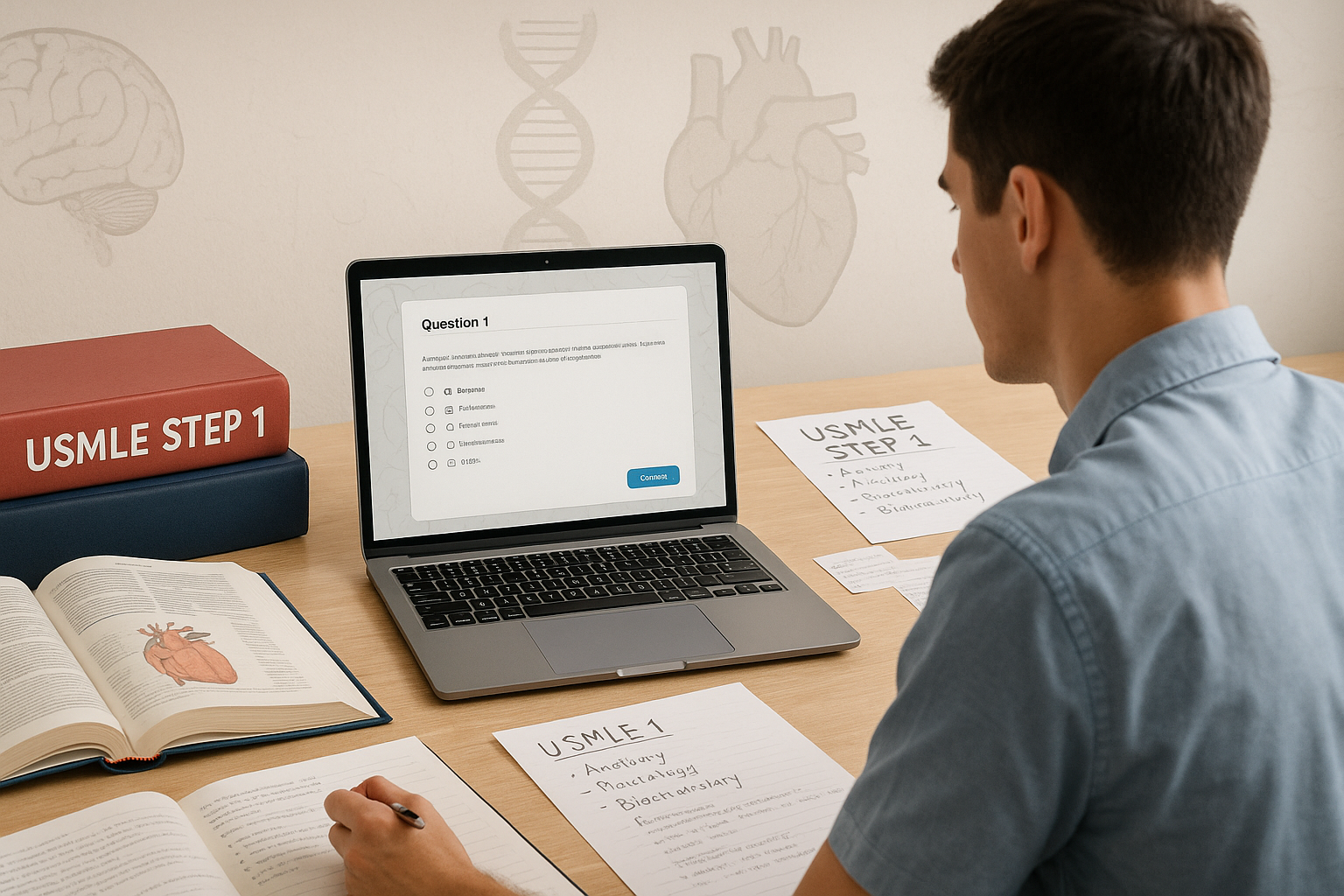
Beat Resource Overload: The Minimalist USMLE Step 1 Study Stack
Step 1 success rarely hinges on owning more books or subscriptions; it hinges on high-fidelity retrieval practice and consistent feedback.
USMLE Step 1Prepare for Step 1 with guides on foundations, QBank strategy, NBME review, Free 120, weak-area repair, repeated misses, study schedules, and the systems-based knowledge needed for pass/fail readiness.

Pick one guide that matches what you keep missing, then use MDSteps examples to practice that reasoning in question form.
1. Pick a guide below → 2. See how MDSteps teaches it → 3. Try a sample breakdown →These guides are meant to make the next vignette feel less confusing, not add another long reading assignment to your day.
Study the signs, labs, wording, and clinical setup that point you toward the most likely answer.
Practice separating the best answer from the option that only sounds close.
Use missed questions to decide what to review next instead of rereading everything again.
Step 1 success rarely hinges on owning more books or subscriptions; it hinges on high-fidelity retrieval practice and consistent feedback.
USMLE Step 1

pattern-recognition guide to “gene-to-mechanism-to-phenotype” questions.
USMLE Step 1
Receptor-first schema to predict drug effects, adverse events, and baroreflex outcomes in stems.
USMLE Step 1
Build a focused 6-week USMLE Step 1 study schedule using one QBank, NBME checkpoints, spaced review, error rules, and exam-ready practice.
USMLE Step 1
USMLE Step 1 is the first exam in the United States Medical Licensing Examination series. Since 2022 it’s pass/fail, but passing still requires a solid grasp of the basic sciences and the ability to apply them in clinical scenarios.
USMLE Step 1
The USMLE Step 1 is not merely an exam—it is a rite of passage in medical education. This test assesses your ability to apply foundational biomedical knowledge in a clinical context.
USMLE Step 1Start with the Step 1 page, then review features and sample explanations before comparing pricing.