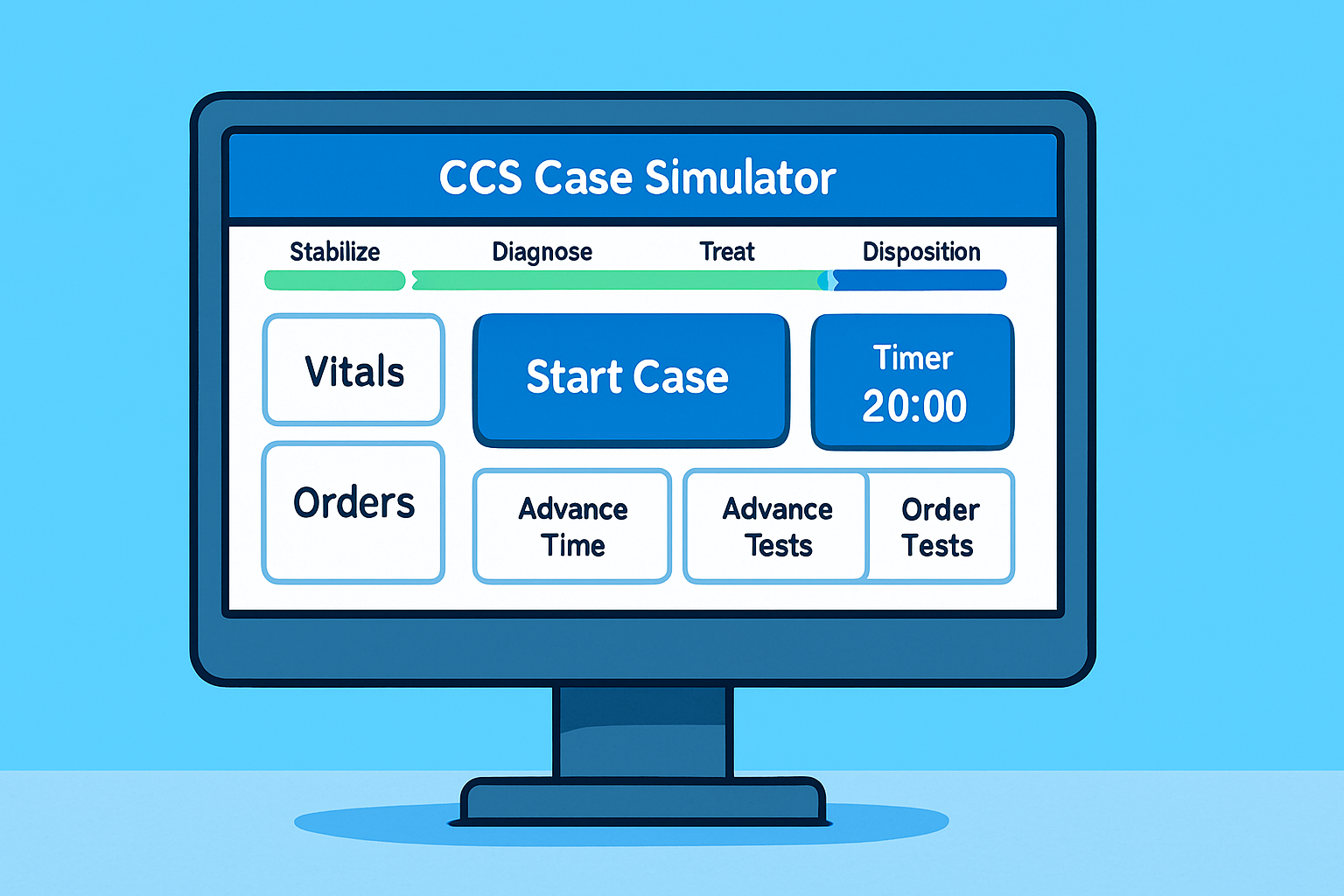
The Free 137 Step 3 score guide begins with one rule: treat the sample questions as a diagnostic tool, not as a miniature Step 3 score report. The official Step 3 sample materials include more than 100 multiple-choice questions, delivered in PDF format and through an interactive testing experience. They are useful because they expose examinees to official wording, timing pressure, answer style, and clinical reasoning. They are limited because they do not provide a three-digit score, a standard error of measurement, a national percentile, or a complete prediction model. Many examinees finish the sample blocks and immediately search for a conversion chart. That instinct is understandable, but it can mislead. A percent correct on these questions is not equivalent to a USMLE Step 3 score. The real Step 3 examination includes two testing days, 412 multiple-choice items, and 13 to 14 computer-based case simulations. Day 1 emphasizes Foundations of Independent Practice, including basic science applications, biostatistics, epidemiology, ethics, communication, and diagnostic reasoning. Day 2 emphasizes Advanced Clinical Medicine, management, prognosis, surveillance, and CCS performance. A sample set of 137 questions cannot reproduce that full construct. The better use of the sample is to answer four practical questions. First, did you understand the tested diagnosis or management principle? Second, did you recognize the exam task quickly enough? Third, did you lose points because of knowledge, interpretation, or timing? Fourth, did your missed questions cluster in ways that predict risk on Day 1, Day 2, or CCS-adjacent management thinking? For most Step 3 candidates, the sample is most valuable during the final 1 to 3 weeks before test day. Earlier use may be appropriate if you need a baseline, but that approach has a cost. Once you have seen the questions, retaking them inflates confidence because recognition replaces reasoning. If you use the set early, save at least one official-style block or a self-assessment for the final readiness check. One important 2026 issue is software familiarity. USMLE announced that Step 3 examinees whose first exam day is on or after March 10, 2026 use the updated testing software. The total exam length and number of items did not change, but the MCQ blocks became shorter. Day 1 now has 12 blocks of 18 to 20 items, and Day 2 has 9 blocks of 20 MCQs before CCS. This matters when interpreting Free 137 performance because fatigue and pacing now feel different from older long-block practice. A candidate who performs well in a 30-minute official-style block, but struggles in long QBank sets, may still need endurance practice. A candidate who performs well untimed, but loses accuracy when the timer is enabled, should treat timing as a clinical reasoning problem. The sample also helps identify whether you are thinking like a supervised learner or like the independent general physician Step 3 tests. The exam expects an as-yet undifferentiated physician who can handle common ambulatory, emergency, inpatient, preventive, and longitudinal care tasks. This is why Step 3 questions often ask for the next best step, best initial test, most appropriate management, risk factor, adverse effect, prognosis, or counseling strategy. The correct answer is usually not the most advanced option. It is the safest action that fits the setting, severity, and timing. Do not reduce the exercise to a single number. A 68% with clean reasoning and a few weak topics can be safer than a 74% built on guessed answers, memorized patterns, and slow pacing. The exam does not reward recognition alone. It rewards correct decisions under constraints. Percent correct is the easiest metric to calculate and the easiest metric to misuse. The numerator is the number of correct answers. The denominator is the number of scored questions completed. That gives a raw percentage. The problem is that Step 3 is not scored by simply converting a raw percentage to a three-digit score. The real exam uses psychometric methods across forms, item difficulty, and multiple components. A single practice set cannot capture those features. Still, percent correct is not useless. It is a structured warning system. The key is to interpret it as a probability signal, then attach actions to it. A low score does not mean failure is inevitable. A high score does not guarantee readiness. The question is whether the pattern of performance matches the demands of the two-day exam. These bands should be read conservatively. A candidate who has already seen explanations, forum discussions, or answer lists should discount the result. The first pass is the meaningful one. A second pass measures memory and familiarity. It may still help reinforce concepts, but it should not be used for readiness prediction. The most informative percent correct is block-level performance. Suppose a candidate scores 80%, 62%, 70%, and 58% across four blocks. The total may look acceptable, but the variability is the warning. Wide swings often reflect fatigue, poor task recognition, or topic-specific instability. Conversely, a steady 69% across blocks may be easier to improve because the error process is more consistent. Timing adds another layer. If your untimed score is 78% and your timed score is 62%, the primary problem is not content alone. It may be slow reading, overannotation, inability to decide between two reasonable answers, or a habit of rereading the stem after seeing the options. Step 3 rewards a disciplined sequence: identify setting, severity, stability, task, and decision point. The timer punishes candidates who start by collecting every detail before knowing what the question asks. Review guessed correct answers. Many examinees ignore these because the score report marks them as right. That is a mistake. A guessed correct answer is a hidden miss. It means the reasoning was not reproducible. Mark those items as yellow, then write the rule you should have used. A true correct answer should be fast, defensible, and repeatable. The goal is not to make the Free 137 into a perfect score predictor. The goal is to convert a raw percent into a study prescription. When a candidate says, “I got 70%,” the next question should be, “What kind of 70% was it?” A stable, timed, explanation-supported 70% is different from a rushed 70% with many guesses and weak CCS readiness. Official sample questions help because they show how test writers frame common clinical decisions. The danger is that candidates often review answers too passively. They read an answer key, confirm the correct option, then move on. That produces recognition, not durable reasoning. The correct review process should create reusable rules for future vignettes. Start by classifying the question task before reading any explanation. Was the item asking for diagnosis, mechanism, risk factor, next best step, initial management, definitive treatment, prognosis, prevention, ethics, quality improvement, or interpretation of a study? Task misclassification is one of the most common causes of Step 3 errors. A candidate may know the disease but choose a definitive test when the question asks for the initial test. Another may know the treatment but select it before stabilization, pregnancy status, renal function, or contraindications are addressed. Next, identify the pivot clue. The pivot clue is the detail that changes the answer from a plausible distractor to the correct option. In Step 3, the pivot is often setting, acuity, time course, stability, pregnancy, age, comorbidity, medication exposure, test result, or patient preference. For example, the phrase “hemodynamically unstable” can move an answer from diagnostic confirmation to immediate intervention. “Asymptomatic” can move the answer from treatment to screening, observation, or counseling. “Postpartum” may change the differential and urgency. The pivot clue should appear in your explanation. Diagnosis, next step, treatment, prevention, statistics, ethics, or prognosis. Identify the clue that makes one answer safer or more appropriate. Explain why each tempting option fails for timing, setting, or severity. Create a one-line test-day rule that prevents the same error. A strong explanation has three parts. First, it states why the correct answer fits the task. Second, it explains why the best distractor is wrong. Third, it converts the lesson into a repeatable rule. Avoid explanations that only restate the diagnosis. “This is heart failure” is not enough. A Step 3 explanation should say what the exam wanted you to do with that diagnosis. Use caution with unofficial answer explanations. They can be useful for learning, but their quality varies. Some are accurate and educational. Others overclaim, use outdated reasoning, or turn a question into a memorized fact. Cross-check management statements against trusted sources when the issue involves screening, vaccination, drug safety, emergency care, or guideline-based treatment. The USMLE sample itself should anchor your wording and question style, but your explanation should be evidence-aligned. When reviewing incorrect answers, do not simply label them as “wrong.” Write a reason category. A distractor can be wrong because it is too late, too early, too invasive, too narrow, too broad, contraindicated, not indicated in the setting, or directed at the wrong diagnosis. This is especially important for Step 3 because many options are clinically real. The exam often asks for the best action among actions that could be considered later. Because the patient has [pivot clue], the correct next step is [action] rather than [tempting distractor], since [rule about timing, safety, setting, or pathophysiology]. This template forces reasoning. It prevents vague review. It also helps you build a personal rule bank. After 20 to 30 missed questions, patterns usually appear. You may discover that your errors are not random. You may be overtreating stable patients, delaying stabilization in unstable patients, missing contraindications, choosing diagnostic tests when counseling is the task, or confusing association questions with management questions. For candidates using the MDSteps Platform, this is where automatic flashcard decks from missed questions can be useful. The goal is not to memorize answer letters. The goal is to convert misses into portable rules that can be exported to Anki and reviewed under spaced repetition. Use that only for rules you can explain in your own words. Free 137 can show what you missed, but the real value comes from knowing why you missed it: content gap, management sequence, timing, distractor pull, or CCS readiness. MDSteps helps turn those misses into targeted Step 3 practice. The official sample questions, UWSA-style self-assessments, and QBank blocks measure overlapping but different things. Treat them as a triangulation system. If all three point in the same direction, your readiness estimate becomes more credible. If they disagree, the disagreement is the data. The sample questions are closest to official USMLE wording. They are useful for style, pacing, and task recognition. Their weakness is that they do not generate a validated three-digit score. UWSA-style exams are useful because they provide a score estimate and broader testing experience. Their weakness is that they may emphasize different distributions, question styles, and difficulty patterns compared with the current exam. QBank blocks are useful for deliberate practice and topic repair. Their weakness is that they are often influenced by prior exposure, tutor mode, system-based study, and variable question difficulty. When results conflict, analyze the conditions. Was the Free 137 timed? Was UWSA taken after a night shift? Were QBank blocks random, mixed, and unused? Did you pause blocks? Did you review answers mid-block? These conditions matter. A polished score under unrealistic conditions is less useful than a lower score under exam-like conditions. A common pattern is strong QBank performance with disappointing official sample performance. This usually means one of three things. First, the candidate has learned the QBank’s explanation style rather than the exam’s decision style. Second, the candidate is recognizing repeated educational patterns rather than solving new vignettes. Third, the candidate is overthinking simpler official questions because QBank training has made every detail feel suspicious. The opposite pattern also occurs. A candidate may perform reasonably well on the sample questions but poorly on UWSA. This may reflect endurance problems, broader content gaps, or discomfort with longer stems and higher perceived difficulty. In that case, do not dismiss UWSA. Use it to identify systems and competencies that need repair, then return to official-style tasks to confirm transfer. For Step 3, CCS must be included in any comparison. A candidate can look acceptable on MCQs and still lose points through poor case management. CCS requires timely orders, monitoring, reassessment, diagnosis, treatment, counseling, and disposition. It tests active management rather than answer selection. If your MCQ percent correct is borderline, strong CCS performance may help overall readiness, but it should not be used as an excuse to ignore repeated MCQ errors. Use analytics to avoid emotional interpretation. A dashboard that separates systems, tasks, timing, and repeated misses can prevent a vague conclusion such as “I am bad at medicine.” The educational question is more specific: which decision step fails most often, and under what condition? The most productive review starts after the score is calculated. Every missed item should become a study decision. The goal is not to rewatch large volumes of content or restart from the beginning. The goal is to identify the shortest repair path that improves future decisions. Use six error categories. The first is knowledge deficit. You did not know the disease, test, drug, adverse effect, risk factor, statistic, or guideline. The second is recognition failure. You knew the concept but did not recognize it in vignette form. The third is sequencing error. You chose an action that could be correct later, but not now. The fourth is distractor attraction. You selected a plausible option because of one familiar clue while ignoring the pivot. The fifth is statistics or interpretation error. You mishandled sensitivity, specificity, likelihood ratios, confidence intervals, bias, or screening logic. The sixth is timing error. You rushed, changed an answer late, or did not finish with enough time to reason. Each category needs a different fix. Knowledge deficits require targeted reading and retrieval. Recognition failures require more vignette exposure. Sequencing errors require algorithms. Distractor attraction requires contrast tables. Statistics errors require formula practice and interpretation drills. Timing errors require block strategy. The repair should be small enough to complete the same day. A missed anticoagulation question should not trigger a three-day review of all hematology. It should trigger a focused review of indication, contraindication, next step, monitoring, and reversal if relevant. Then it should be tested with mixed questions so the concept transfers outside the original context. Write test-day rules in active language. Avoid vague notes such as “review asthma.” A stronger note is: “Stable outpatient asthma exacerbation asks severity and controller use before escalating long-term therapy.” A stronger note for statistics is: “For screening questions, identify disease prevalence, false positives, and the outcome being measured before choosing the best test.” These rules are useful because they direct attention under time pressure. After every 15 to 20 misses, look for clusters. If half of your errors are sequencing errors, more content reading may not fix the problem. You need management algorithms. If many errors involve counseling, ethics, or quality improvement, your issue may be recognizing physician task rather than disease. If biostatistics errors cluster on Day 1-style tasks, schedule short daily drills rather than a single marathon session. A good final-week plan is narrow, mixed, and measurable. Spend the first part of the day repairing the highest-yield error cluster. Spend the second part doing timed mixed questions. Spend the final part reviewing only questions that produced a rule. Avoid passive rereading at night. Step 3 rewards retrieval and decision-making, not familiarity. For candidates who need structure, an automatic study plan generator can help translate performance data into daily tasks. The plan should remain specific: mixed blocks, CCS cases, biostatistics drills, ethics review, and targeted weak systems. A plan that simply says “do more questions” is not a plan. It is a workload. The Step 3 sample questions are MCQs, but the exam is not only an MCQ exam. This matters because a candidate may use the sample score to estimate readiness while ignoring the second-day case burden. The real examination includes Day 1 MCQs, Day 2 MCQs, and CCS cases. The skill set overlaps, but it is not identical. Day 1 often feels more abstract. It can test foundational science applied to clinical care, biostatistics, epidemiology, drug mechanisms, adverse effects, ethics, communication, safety, and interpretation of medical literature. Candidates who have trained mainly with management questions may feel surprised by mechanism, risk factor, and study design tasks. The sample questions can reveal that weakness. A wrong answer in biostatistics is not just one lost point. It may signal an entire task family that needs rapid repair. Day 2 is more management-heavy. The examinee must choose safe next steps, ongoing treatment, prognosis, surveillance, and disposition. Questions may look easier because the disease is familiar, but the answer choices can be close. The trap is choosing the option that is medically true rather than the option that is most appropriate now. For example, a definitive intervention may be correct after stabilization, imaging, culture, consultation, or patient-centered counseling. Step 3 frequently tests order and context. CCS adds a different problem. You no longer choose from answer choices. You must place orders, advance time, monitor response, and adjust management. A strong MCQ performer can still struggle if they forget monitoring, counseling, location of care, or timely reassessment. Use MCQ misses to predict CCS risk. If you repeatedly miss “next best step” questions because you delay stabilization, that same habit can harm emergency CCS cases. If you over-order in MCQs, you may over-order in CCS. If you fail to reassess after treatment in MCQs, you may fail to advance the case correctly. Biostatistics, mechanisms, ethics, diagnostic interpretation, and foundational science applications. Management sequence, prognosis, surveillance, outpatient care, and inpatient decision-making. Stabilization, orders, monitoring, reassessment, counseling, and disposition. Timing should be practiced in the current exam format. For examinees testing under the updated software, 30-minute MCQ blocks are the relevant unit. Shorter blocks can feel more manageable, but they reduce the opportunity to recover from a slow start. A few overread questions can create immediate pressure. Use a three-pass strategy. First, answer questions you can solve cleanly. Second, return to flagged questions with a specific reason. Third, make final decisions without reopening every item. Flagging should be disciplined. Do not flag every question that feels uncomfortable. Flag questions where one additional comparison could change the answer. If you lack the knowledge entirely, make the best decision and move on. If two answers differ by timing, setting, or severity, flag and return. If the stem has a lab value or study table, answer the task before performing extra calculations. For CCS practice, use cases that force real-time decision-making. Live vitals CCS cases with timed orders and real physiology are useful because they teach cause and effect. You should know whether a patient improved after fluids, antibiotics, bronchodilators, insulin, oxygen, or a procedure. The learning target is not a memorized order set. It is recognizing whether the patient is safer after your intervention. After the sample questions, choose the next task based on the weakness. If Day 1-style misses dominate, prioritize biostatistics, mechanisms, and ethics. If Day 2 management misses dominate, prioritize mixed medicine, pediatrics, obstetrics and gynecology, psychiatry, surgery, and preventive care. If next-step errors suggest poor active management, prioritize CCS immediately. Do not allow a single percent correct number to hide the structure of the exam. A sample question score becomes useful only after a structured review. Before you decide that you are ready, check whether the result was produced under conditions that resemble the exam. This is especially important for busy residents, international medical graduates, and candidates retaking Step 3 after a failed attempt. A practice result can look reassuring while still hiding unstable habits. If three or more checklist items are incomplete, the sample result is not ready to guide a test-date decision. Complete the missing review steps first. The goal is to avoid two common errors: panic after a modest percent correct and false confidence after a high percent correct. Use the final week to preserve strengths and repair the highest-yield weakness. Do not scatter effort across every resource. A practical final-week schedule might include one timed mixed MCQ block daily, one focused error cluster repair session, one biostatistics or ethics drill, and two to four CCS cases depending on weakness. Candidates with strong CCS but weak MCQs should shift time toward timed blocks. Candidates with acceptable MCQs but weak cases should shift time toward CCS sequencing. When reviewing answer choices, ask whether the distractor was wrong because of diagnosis, timing, severity, setting, contraindication, or task. This single habit improves Step 3 reasoning because it trains you to compare answers rather than simply recognize facts. The real exam often gives several clinically reasonable options. Your job is to choose the one that best matches the immediate physician task. For a final integrated workflow, use the MDSteps Step 3 tools to pair adaptive MCQ review with timed CCS practice and readiness analytics. The strongest use is after you have identified your error categories. That lets the platform help you practice the specific decisions that are limiting your score, rather than adding more undirected question volume. You can treat the sample result as reassuring only when it is timed, first-pass, stable across blocks, supported by UWSA or equivalent self-assessment performance, and paired with safe CCS execution. If one of those pillars is weak, the result should trigger targeted repair rather than immediate reassurance. Step 3 readiness is not a single number. It is the convergence of knowledge, timing, official-style reasoning, management sequence, and active patient care. The Free 137-style sample questions are valuable because they expose those domains. Their greatest benefit comes when you convert each answer into a rule and each rule into a corrected behavior. Medically reviewed by: Daniel R. Calderon, MDHow to Use the Free 137 Without Overreading It
Best use case for the sample questions
Percent Correct: What the Number Can and Cannot Tell You
Percent correct range
Likely meaning
Immediate action
Risk if ignored
< 55%
Major gaps in core diagnosis, management, or question task recognition.
Delay a readiness decision. Rebuild weak systems and retest with a scored self-assessment.
False reassurance from completing questions without correction.
55% to 64%
Borderline signal. Some content may be present, but errors likely cluster.
Review every miss and identify whether UWSA, QBank, and CCS practice agree.
Entering test day with unstable management sequencing.
65% to 74%
Potentially workable range if timing, UWSA, and CCS practice are also acceptable.
Target recurrent traps, biostatistics, ethics, prognosis, and next-step questions.
Assuming all misses are random rather than pattern-based.
75% to 84%
Generally reassuring if achieved timed and on first exposure.
Preserve performance with mixed blocks and CCS drills.
Overfocusing on rare facts instead of exam execution.
≥ 85%
Strong official-style MCQ signal, but still not a score conversion.
Maintain timing, sleep, CCS fluency, and test-day logistics.
Neglecting CCS or Day 2 management because MCQs feel comfortable.
How to calculate a useful score sheet
Answers and Explanations: How to Review Without Memorizing the Key
Name the task
Find the pivot
Reject distractors
Write the rule
One-line explanation template
Do not just review your Free 137 score. Find the pattern behind the misses.
A percentage alone does not tell you what to fix.
Comparing Free 137, UWSA, and QBank Blocks
Tool
Best use
Main limitation
How to interpret disagreement
Official sample questions
Official style, timing feel, task recognition, answer logic.
No official three-digit conversion for examinee prediction.
Low sample score with high UWSA suggests official wording or pacing problem.
UWSA-style self-assessment
Score estimate, longer testing stamina, broad readiness signal.
Not identical to the real exam blueprint or scoring model.
Low UWSA with high sample score suggests content depth or endurance issue.
Mixed timed QBank blocks
Daily practice, weak-area repair, test-taking repetition.
Inflated by repeated exposure or narrow system-based blocks.
High QBank with low sample score suggests memorization rather than transfer.
CCS practice
Day 2 case sequencing, order timing, monitoring, disposition.
Separate interface and scoring logic from MCQs.
Strong MCQs with weak CCS practice still leaves Step 3 risk.
Practical readiness matrix
How to Turn Missed Questions Into a Study Plan
Error type
Typical sign
Best repair
Example rule
Knowledge deficit
You could not explain the diagnosis or management principle.
Read one focused source, then answer 10 to 15 related mixed questions.
Know the first-line test before memorizing rare confirmatory tests.
Recognition failure
You knew the topic after seeing the answer.
List the vignette clues and compare with two mimics.
Do not name the disease from one clue alone.
Sequencing error
Your answer was reasonable, but not the next step.
Write stabilize, diagnose, treat, monitor, disposition sequence.
In unstable patients, immediate stabilization outranks diagnostic neatness.
Distractor attraction
You chose a familiar option because it matched one phrase.
Write why the best distractor is wrong.
The best answer must fit setting, severity, and timing.
Biostatistics error
You knew the formula but misread the study design.
Practice interpretation before calculation.
Identify the denominator before calculating risk.
Timing error
You understood the topic but rushed or changed late.
Use timed 30-minute blocks and a fixed flagging rule.
Flag uncertainty, not indecision.
Timing, Day 1 Traps, Day 2 Management, and CCS Risk
Day 1 signal
Day 2 signal
CCS signal
Rapid-Review Checklist Before You Trust the Result
Rapid-Review Checklist
Final decision rule
References
USMLE Step 3
Free 137 Step 3 Score Guide for 2026

For Free 137 Step 3 review
Free 137 tells you what you missed. MDSteps helps show why you missed it.
After Free 137, the next move is not just reading explanations. The next move is figuring out whether your misses came from management logic, timing, clue recognition, distractor pull, or CCS-style decision sequencing.
Full access includes Step 3 QBank practice, CCS cases, analytics, auto-flashcards, and study planning.
Miss-pattern review
See whether the miss came from the topic, the clue, the timing, or the answer-choice trap.
Step 3 management logic
Practice treatment, monitoring, reassessment, prevention, and follow-up decisions.
CCS readiness bridge
Use CCS cases to test whether your management plan works when orders, timing, and reassessment matter.
High-yield interpretation: Your percent correct is a readiness signal only after you review why each answer was right or wrong. A raw percentage without explanations is a weak measure.
1
2
3
4
Finished Free 137?
Step 3 miss-pattern check
Step 3-style reasoning reviewManagement and timing trapsCCS readiness check
Start with a free Step 3 reasoning review. Full access includes Step 3 QBank practice, CCS cases, analytics, flashcards, and study planning.
After Free 137
Still missing the same kinds of questions?
Read why that happens.
Exam-day warning: Do not move your test date based only on a raw sample percentage. Use percent correct, UWSA trend, timed mixed blocks, CCS performance, and error pattern together.