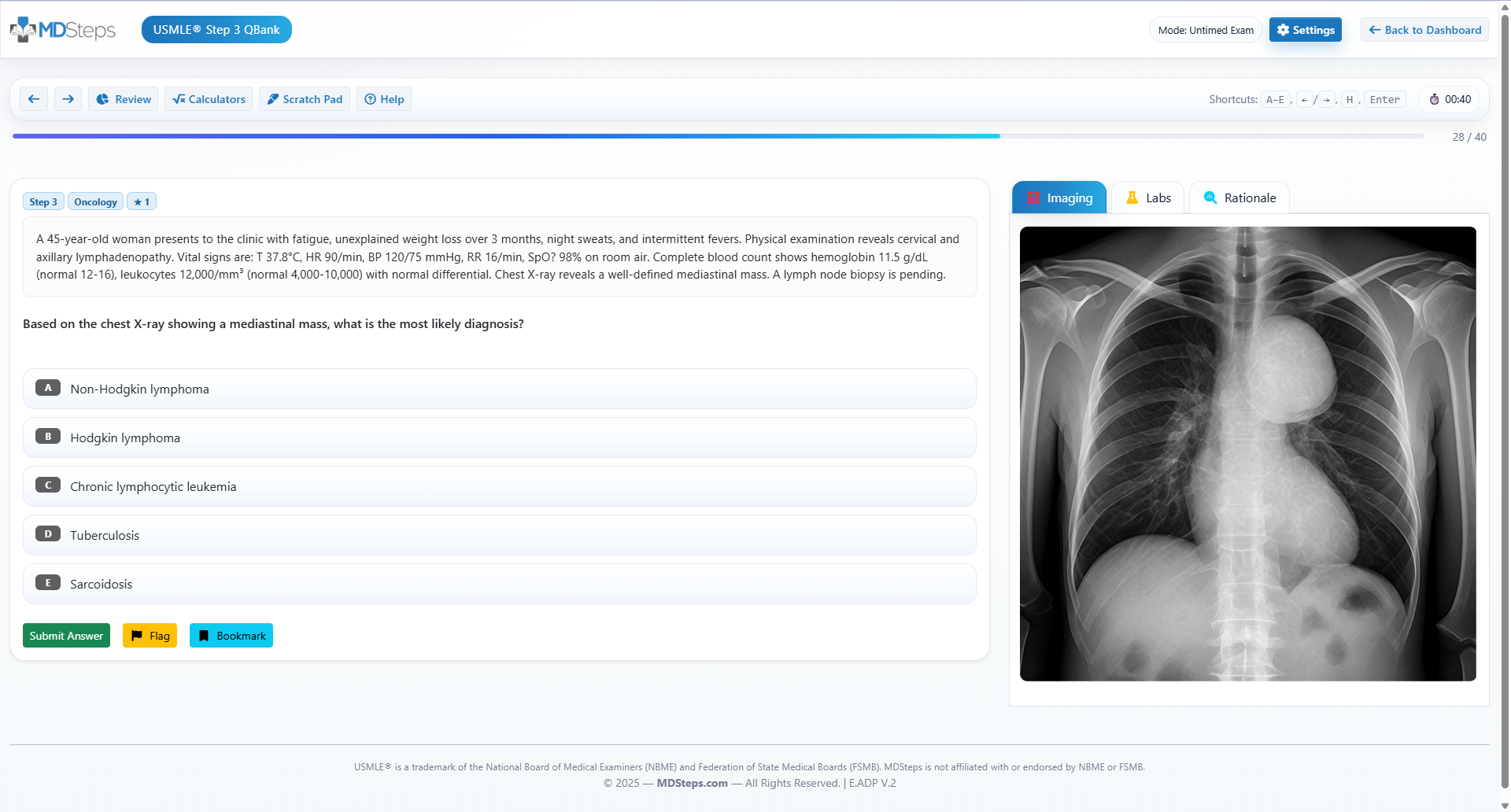
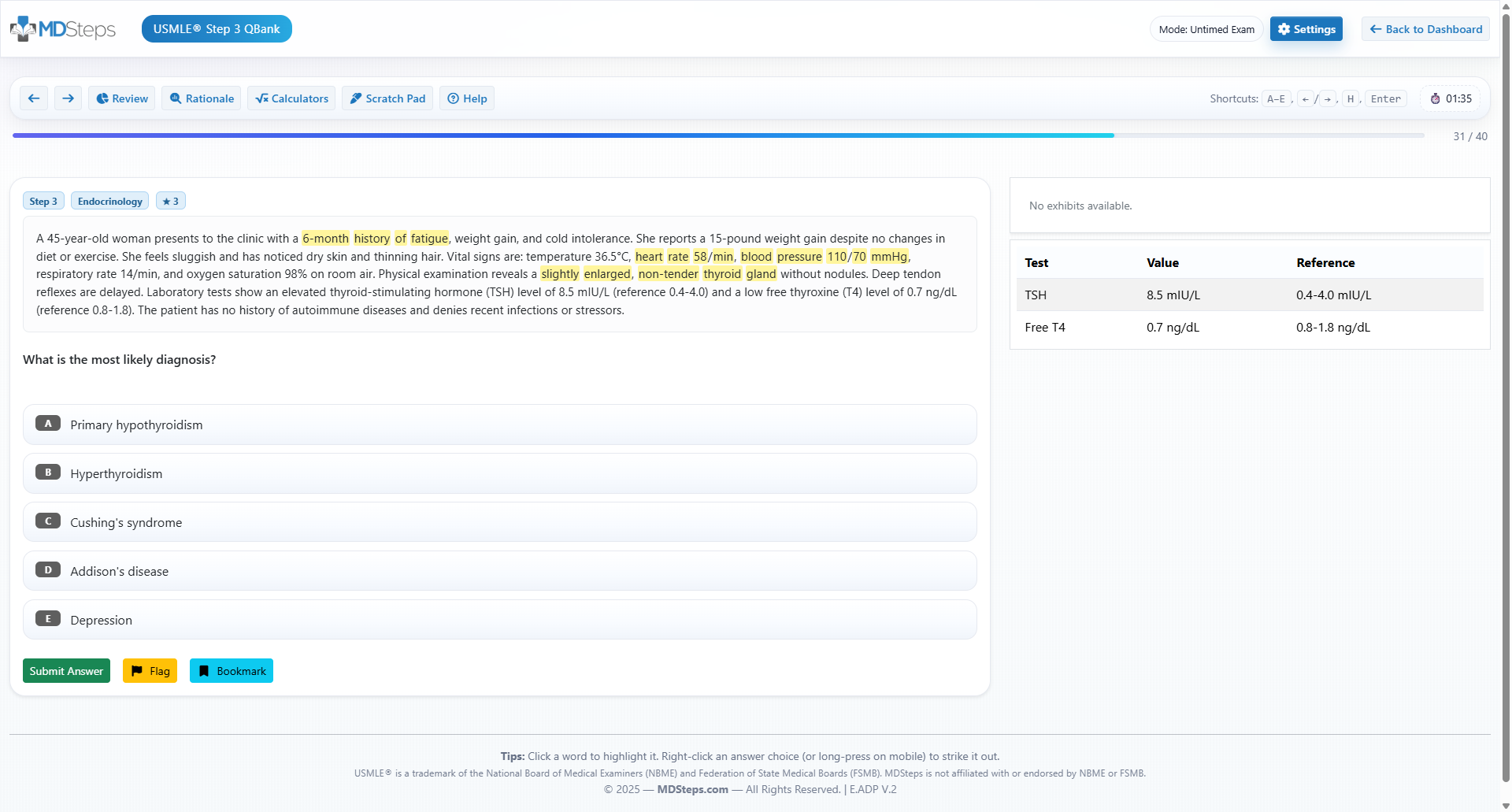
Step 1 success doesn’t require using every resource; it requires mastering a few that complement each other. Minimalist prep is about depth, not volume. Most 250+ scorers report full retention of just 2 core video platforms plus consistent QBank practice. The real differentiator is *retrieval practice*—being able to recall, not just re-watch. Pathoma, Boards & Beyond, and Sketchy each target distinct learning domains: conceptual pathology, systems-based clinical logic, and vivid visual microbiology or pharmacology. Rather than stacking them all, the minimalist approach combines the two that best fill your cognitive gaps, reinforced by high-yield question work through the MDSteps Adaptive QBank. By trimming overlap and scheduling strategically, you free up time for self-testing—an evidence-proven predictor of NBME performance. Minimalism isn’t laziness; it’s precision. Choosing two of these platforms covers nearly all Step 1 content domains. For example, combining Pathoma + Sketchy ensures high-yield retention of pathology and microbiology—ideal for visual learners. Meanwhile, Boards & Beyond + Sketchy works better for systems-thinkers who want strong physiological scaffolding. Most students waste time rotating between three long-form video platforms. The smarter move is to pick two based on your cognitive profile: Whichever pair you choose, supplement with the MDSteps Adaptive QBank to translate passive recognition into active recall. The QBank automatically generates flashcards from your misses and syncs them into spaced-repetition decks—an essential component of minimalist retention. Get full MDSteps access with NBME-style questions, reasoning-first explanations, analytics, flashcards, and CCS cases for one simple monthly price. A minimalist plan trims redundancy while maintaining exposure. Aim for 25 hours of core resource study plus 15 hours of question-based reinforcement each week. Example rotation: This rhythm balances new learning with retrieval and reflection—critical for encoding durability. Redundancy kills retention. Watching multiple lectures on the same topic creates interference and fatigue. Instead of re-watching, shift to active recall. After completing one video source on a topic, move immediately to practice questions or self-explanation prompts. MDSteps’ analytics dashboard tracks weak categories in real time and directs you to targeted micro-lectures or flashcard sets, preventing “content bloat.” Use the “two-touch rule”: encounter a concept through one core source and one active-testing form within 48 hours. Beyond that, repetition without challenge adds minimal value. Minimalist learners excel when they pivot early to full-length question blocks. During the 6–8 weeks of dedicated, limit content review to ≤3 hours/day and invest the rest in MDSteps QBank sessions under timed conditions. Each missed question should trigger a flashcard automatically, reinforcing weak recall patterns. This transition mirrors NBME’s testing architecture—decision-making under fatigue, not fact-recall under leisure. The goal isn’t to “finish” videos; it’s to think like a test writer. Minimalist prep optimizes that shift faster by eliminating unnecessary video hours and maximizing retrieval exposure. If you’re following this list, you’re already within the top 15 % efficiency bracket of Step 1 prep according to aggregate learner-analytics data. Minimalism isn’t about doing less—it’s about removing waste. Pathoma, Boards & Beyond, and Sketchy are all excellent, but using all three equally dilutes focus. Pick two that align with your learning style, tie everything into an adaptive testing workflow, and watch your curve rise steadily. MDSteps’ ecosystem—QBank, flashcard sync, auto-planner, and readiness dashboard—transforms those selective inputs into measurable performance gains. The data are consistent: mastery through testing beats endless content review. When you prioritize retrieval, reflection, and analytics-driven correction, *two* resources truly are enough for a 250+ performance. References:Pathoma vs Boards & Beyond vs Sketchy: The Minimalist Combo That Still Scores 250+
The Minimalist Philosophy Behind High-Scoring Prep
Mapping Strengths: What Each Platform Actually Teaches Best
Platform Core Strength Best Used For Weakness Pathoma Conceptual pathology with board-style integration Inflammation, neoplasia, systemic disease Limited physiology detail Boards & Beyond Comprehensive systems-based physiology and mechanisms Biochem, cardio, renal, endocrine Time-intensive Sketchy Visual mnemonics and story-based memory Microbiology, pharm, immuno Low conceptual reasoning depth The Two-Resource Formula: How to Decide Your Pair
Compare less. Start practicing for less.
A simpler way to start practicing today.
See how it works
Building a Streamlined Weekly Plan
Day Primary Resource Complement QBank Integration Mon–Tue Boards & Beyond cardio videos MDSteps flashcards 20 cardio questions Wed Sketchy micro Recall sketches review 15 micro questions Thu–Fri Pathoma chapters Condensed notes Mixed blocks Sat Dedicated QBank day Weak-topic tagging 40-question timed set Sun Light review Update flashcards None Avoiding Redundancy and Cognitive Overload
Dedicated Period: Switching Fully to Testing Mode
Rapid-Review Checklist: The Minimalist Audit
Final Verdict: Less Input, More Output
1. Dunlosky J et al. Improving Students’ Learning With Effective Learning Techniques. Psychological Science in the Public Interest, 2013.
2. Custers E. Long-Term Retention of Basic Science Knowledge: A Review Study. Adv Health Sci Educ, 2010.
3. Cepeda N et al. Distributed Practice in Verbal Recall Tasks. Psychological Science, 2006.
4. NBME Content Outline 2024. nbme.org
USMLE Step 1
Pathoma vs Boards & Beyond vs Sketchy: Which Combo Is Enough for Step 1?
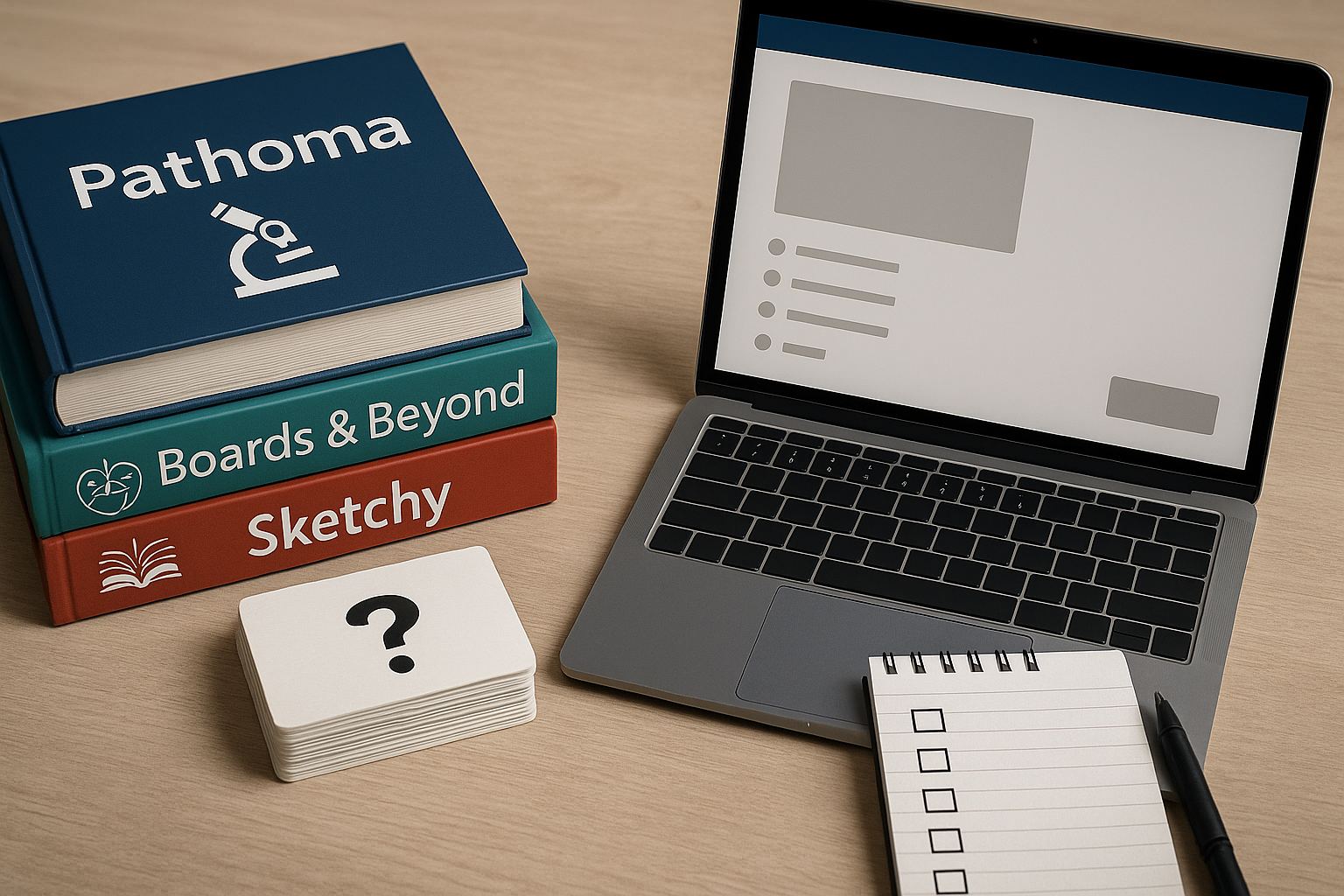
This guide breaks down how to simplify your Step 1 prep by choosing the leanest mix of Pathoma, Boards & Beyond, and Sketchy—without sacrificing your score. Built from evidence-based learning science and board-style recall patterns.
Full access: $27/mo
Lifetime: $299
16,000+ questions$27/month full accessCancel anytime
Monthly access. Cancel anytime. No free trial required.
Lower-friction QBank