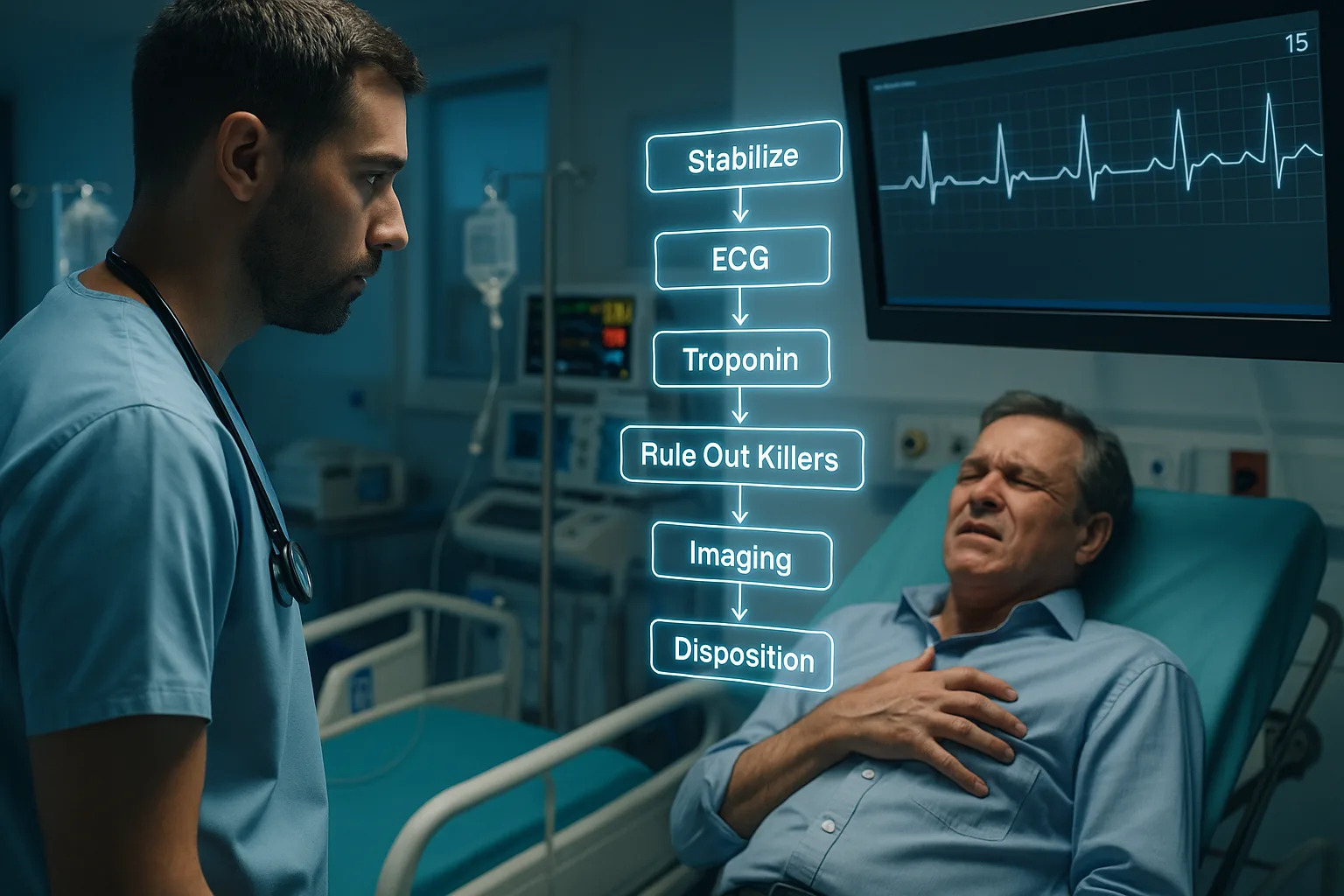
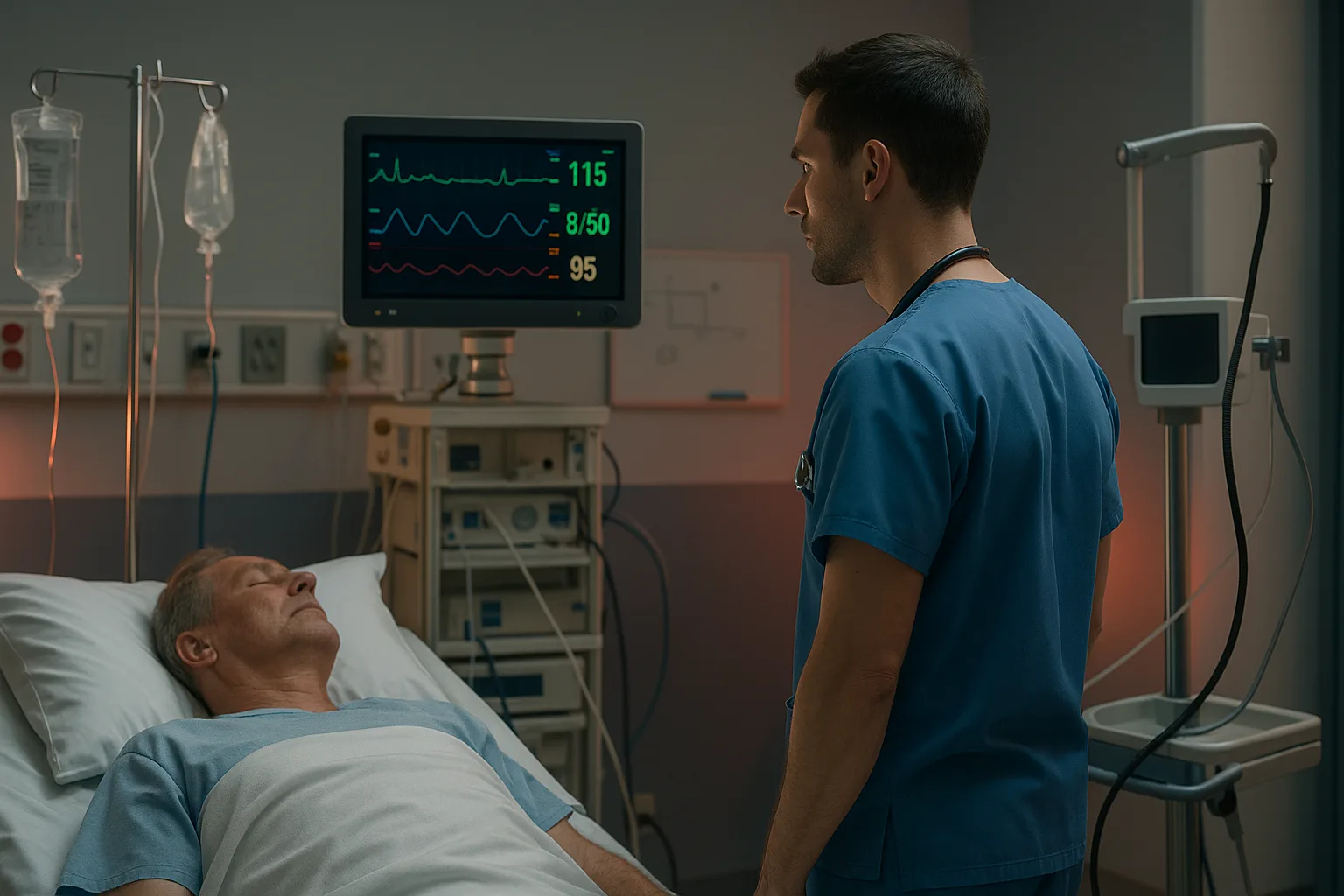
Mastering the distinction between an upper and lower gastrointestinal bleed is a core Step 2 CK expectation, because the first 5–10 minutes of management determine patient survival and test performance. The phrase “upper vs lower GI bleed algorithm” reflects two overlapping diagnostic funnels: one driven by hemodynamics, the other by anatomic source prediction. This opening section provides foundational definitions, early differentials, and the decision logic that underpins every USMLE-style GI bleed vignette. On Step 2 CK, a GI bleed question is rarely about naming melena versus hematochezia. Instead, the exam tests your ability to stabilize the patient, identify red flags, decide imaging vs endoscopy vs medical therapy, and apply clinical probability based on vitals, stool description, labs, medications, and risk factors. The core algorithm centers on three pillars: Because the exam frames management around acute stabilization, Step 2 CK questions often include borderline hypotension, tachycardia, orthostasis, or early hypovolemic shock. Identifying when to activate massive transfusion protocol, when to use 2 large-bore IVs, and when to prioritize airway protection over diagnostic testing is central to scoring high in emergency stabilization domains. Your exam approach begins with recognition patterns: hematemesis is almost always an upper bleed; maroon stools may reflect the right colon or small bowel; and melena generally indicates bleeding above the colon, though 10–15% of fast lower bleeds can mimic it. Vignettes may also test the use of medications such as PPIs, octreotide, prophylactic antibiotics for cirrhotics, or the indications for endoscopic therapy versus IR embolization. The remainder of this article builds the complete clinical pathway: initial stabilization, risk stratification, diagnostic sequencing, endoscopic vs radiologic therapy, disposition decisions, and high-yield exam traps. At the end, you’ll find a rapid-review checklist summarizing all essential algorithmic steps. The first branch of the upper vs lower GI bleed algorithm is always stabilization. Every Step 2 CK vignette begins with airway, breathing, circulation (ABCs). When hypotension or altered mental status is present, airway protection precedes diagnostic workup. High-yield stabilization steps include: USMLE questions often provide subtle clues such as “cool extremities,” “delayed capillary refill,” or “SBP in the high 80s.” Your response should be immediate stabilization, not endoscopy or NG lavage. If you do not stabilize the patient first, the answer is wrong—even if the diagnostic test is ultimately needed later. USMLE trap: If the patient is unstable, never choose “CT angiography,” “colonoscopy,” or “capsule endoscopy” before stabilization. Only after achieving a safe hemodynamic status should diagnostic steps proceed. Once stabilized, the algorithm turns to identifying the probable site of bleeding. On Step 2 CK, pattern recognition is king: stool description, medications, comorbidities, and symptom timing all hint at the bleeding source. Classic upper GI bleed features include: Classic lower GI bleed features include: However, the exam often challenges assumptions: This is where clinical reasoning matters. Factors like cirrhosis, NSAID use, or prior ulcer history heavily tilt toward an upper bleed even if the stool looks bright red. Similarly, older adults with known diverticulosis and a normal BUN:Cr ratio are more likely to have a lower bleed. Algorithm logic for prediction: This predictive phase informs which diagnostic test you pursue next: EGD for upper sources, colonoscopy or CTA for lower, or capsule endoscopy when standard testing fails to localize the source. Get full MDSteps access with NBME-style questions, reasoning-first explanations, analytics, flashcards, and CCS cases for one simple monthly price. Laboratory evaluation is integrated into the upper vs lower GI bleed algorithm to grade severity, identify comorbid risks, and predict the need for intervention. On Step 2 CK, you must interpret labs quickly and know which values change earliest after acute blood loss. Essential labs in all GI bleeds: High-yield lab patterns: Next, apply risk scoring. While Step 2 CK does not expect memorization of full scoring systems, you should know when a patient is “low risk” versus “high risk.” The Glasgow-Blatchford Score (GBS) predicts the need for medical intervention in upper GI bleed, while Rockall helps predict mortality post-endoscopy. General exam-relevant rules: At this stage in clinical management, many students using MDSteps’ adaptive QBank find it helpful to integrate spaced recall flashcards that automatically sync with missed questions involving lab-based risk clues. This reinforces recognition of patterns such as BUN elevation, INR abnormalities, and the early normal-hemoglobin pitfall common in acute bleeding. Once stabilized and preliminarily classified as upper vs lower, the algorithm moves to definitive diagnostic evaluation. Step 2 CK frequently asks the “next best test” after initial stabilization, making this phase high-yield. Upper GI bleed suspected → First test = EGD (esophagogastroduodenoscopy). This is done emergently (within 24 hours) for most patients, and immediately in unstable patients after resuscitation. EGD allows visualization and endoscopic therapy such as clipping, cautery, epinephrine injection, or band ligation for varices. Lower GI bleed suspected & stable → First test = colonoscopy. Colonoscopy requires bowel prep, so it is not used in unstable patients with massive bleeding. Instead, unstable patients require CT angiography or interventional radiology evaluation. If patient is unstable with hematochezia → CTA FIRST to rule out brisk upper source or localize site. This is a classic Step 2 CK trap. CTA is fast, noninvasive, and highly sensitive for active bleeding. It guides embolization via interventional radiology. Capsule endoscopy is used when both EGD and colonoscopy fail to identify the source, suggesting a small bowel bleed. Memorizing this sequencing ensures you consistently select the correct “next best step” answer choices on the exam, where timing and stability determine the preferred diagnostic test. Management diverges significantly based on the bleeding source. Peptic ulcer bleeding is the most common upper-source cause. Management includes: Variceal bleeding requires a specific bundle of therapy: Mallory-Weiss tears often stop spontaneously; treat with PPIs ± endoscopic therapy if bleeding persists. Boerhaave syndrome (esophageal rupture) presents with severe chest pain and crepitus; it is a surgical emergency. Stress gastritis and erosive esophagitis are additional sources tested on Step 2 CK. Lower GI bleeding has different etiologies and different exam-relevant management steps. Diverticular bleeding is the most common cause of acute painless hematochezia. Management includes: Angiodysplasia causes intermittent painless bleeding in older adults, especially those with aortic stenosis or ESRD (Heyde syndrome). Therapy involves colonoscopic cautery; refractory cases may require IR embolization. Inflammatory bowel disease causes chronic bleeding with abdominal pain and diarrhea. Manage with steroids for flares, biologics for maintenance, and colonoscopy for surveillance. Colon cancer causes chronic slow blood loss, iron-deficiency anemia, and occasionally visible bleeding. Vignettes often include unintentional weight loss or change in bowel habits. Hemorrhoids cause bright red blood on toilet paper — extremely low risk and easily distinguished in exam scenarios. When preparing for these distinctions, many MDSteps users rely on the adaptive analytics dashboard, which tracks errors across GI bleed etiologies and automatically generates flashcards from missed questions, exporting them directly to Anki for reinforcement. Here are the most testable pitfalls and clinical pearls related to the upper vs lower GI bleed algorithm: Red flags requiring emergent action: Medically reviewed by: Jonathan Reeds, MD (Gastroenterology)Understanding the Upper vs Lower GI Bleed Algorithm
Algorithm Step 1: Hemodynamic Stability and Immediate Resuscitation
Hemodynamic Status
Initial Action
Next Step
Stable (normal BP, normal mentation)
IV access, CBC, type & screen, PPI
Risk stratify → early endoscopy
Borderline (tachycardia, orthostasis)
IV fluids + labs
Admit, monitor, prep for scope
Unstable (SBP < 90, AMS)
Airway, large-bore IVs, MTP
Stabilize → emergent intervention
Algorithm Step 2: Predicting the Source – Clinical Clues for Upper vs Lower
Compare less. Start practicing for less.
A simpler way to start practicing today.
See how it works
Algorithm Step 3: Laboratory & Risk Stratification Tools
Algorithm Step 4: Diagnostic Sequencing – EGD, Colonoscopy, CTA, or Capsule?
Clinical Scenario
Next Best Test
Suspected upper bleed (melena, hematemesis)
EGD
Stable hematochezia
Colonoscopy
Unstable hematochezia
CTA → IR embolization
EGD + colonoscopy negative
Capsule endoscopy
Algorithm Step 5: Management of Upper GI Bleeds (Ulcers, Varices, Mallory-Weiss)
Algorithm Step 6: Management of Lower GI Bleeds (Diverticulosis, Angiodysplasia, IBD, Cancer)
High-Yield Step 2 CK Traps, Red Flags, and Clinical Pearls
Rapid-Review Checklist
References
Algorithms & Diagnostics
Upper vs Lower GI Bleed: A Complete Step 2 CK Clinical Algorithm
Full access: $27/mo
Lifetime: $299
16,000+ questions$27/month full accessCancel anytime
Monthly access. Cancel anytime. No free trial required.
Lower-friction QBank