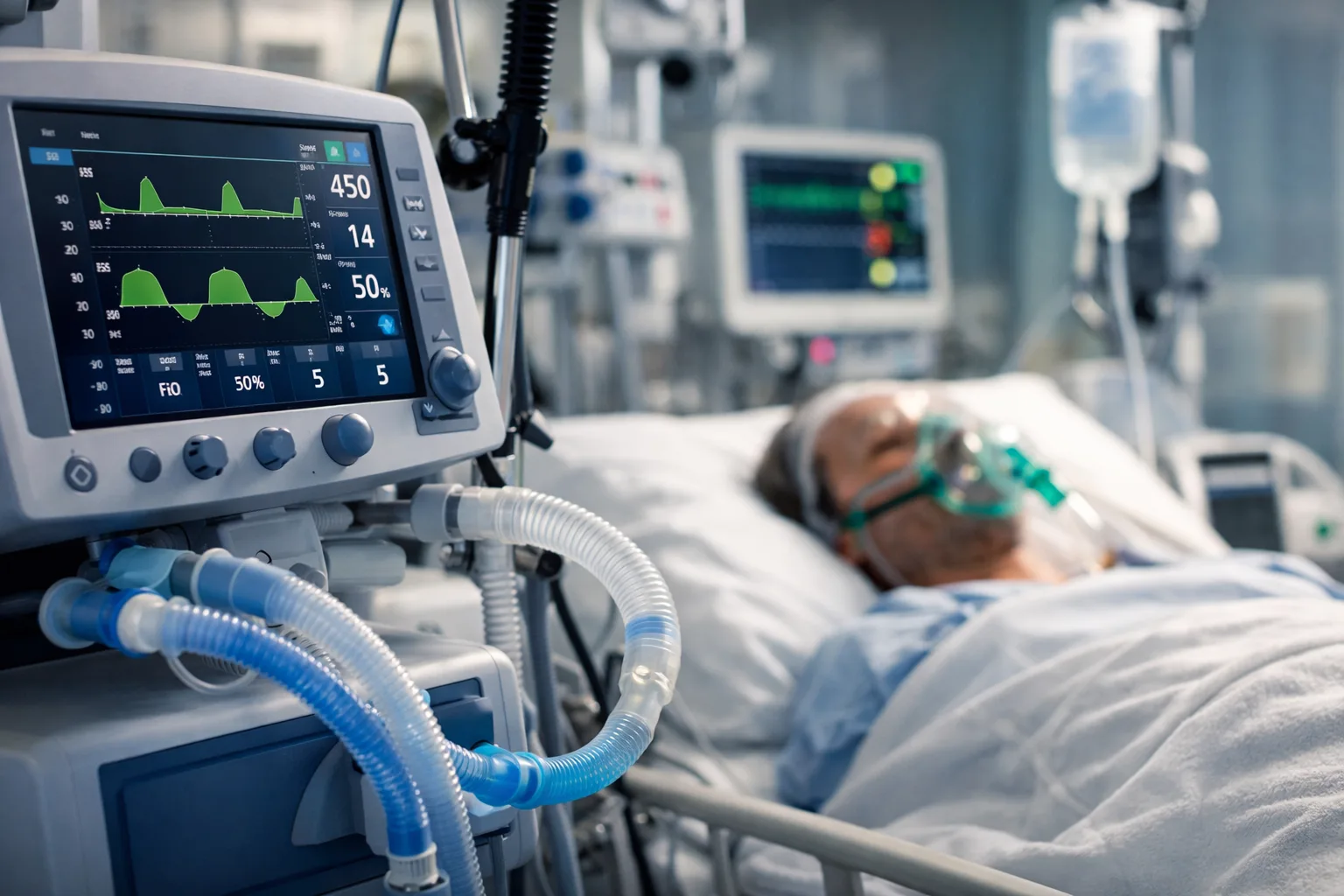
Every USMLE season, the same vignette shows up with different costumes: a patient is short of breath, wheezing, and “looks uncomfortable.”
The stem gives you just enough data to tempt a reflex diagnosis, then the question asks for the next best step.
Your job is not to memorize three separate diseases. Your job is to sort the presentation into one of three buckets:
obstructive airway (asthma), chronic obstructive airway with exacerbation (COPD flare), or volume/pressure overload (acute decompensated heart failure).
Here’s the key USMLE reality: vignettes rarely give you every test. They give you a few “anchor” clues and then hide the rest behind distractors.
So your strategy needs to be robust to missing data. The most reliable approach is to build a mental table with four columns:
time course, bedside pattern, objective tests you can trust, and treat-first moves.
If you can fill those four columns, you can answer 80% of questions even before imaging returns.
Use this table as a sorting key: time course + volume clues + CXR pattern + objective gas exchange trends beat any single symptom.
Notice what the table does not do. It doesn’t pretend that wheeze is exclusive to airway disease.
It doesn’t rely on “smoker = COPD” as a single deciding rule. And it doesn’t assume you’ll be given an echocardiogram.
Instead, it elevates clues the USMLE loves: orthopnea/PND, cardiomegaly/edema on CXR,
sputum change, and CO2 trajectory.
On test day, you rarely have time to “work up dyspnea” like a full clinic visit. The stem gives you a snapshot.
Your goal is to harvest discriminating history—details that shift pretest probability enough to choose management.
A useful rule: if the question stem includes volume language (weight gain, swelling, orthopnea), trust it.
If it includes airway variability (episodic symptoms, triggers, nocturnal cough), trust that.
If it includes baseline chronicity (daily sputum, long smoking history, chronic exertional limitation), lean COPD.
USMLE writers often hide the best history clue in a single phrase. Examples:
“He sleeps in a recliner” is orthopnea until proven otherwise. “His inhaler worked great last time” screams reversible bronchospasm.
“His sputum turned green” is not a microbiology puzzle—it’s a COPD exacerbation clue that will change antibiotic choice.
Another classic move is medication context. A patient “on a daily inhaled corticosteroid and long-acting bronchodilator” with flare symptoms
sounds like asthma or overlap; a patient “who ran out of furosemide” points to HF decompensation; a patient “using oxygen at home” suggests advanced COPD.
Don’t overread medication lists, but do use them as priors.
The physical exam is not a nostalgia exercise. On USMLE, it’s a scoring system:
the exam finds the few bedside findings that reliably correlate with physiology and expects you to use them.
For this triad, the highest-yield exam skills are (1) assessing volume status,
(2) recognizing severe bronchospasm vs “noisy but stable,” and (3) reading vital sign context without overreacting.
A frequent NBME trick is giving you a patient with wheeze and tachycardia, then asking for the “most likely cause of symptoms.”
Tachycardia is nonspecific: anxiety, hypoxemia, beta-agonists, fever, pain. Don’t let it dominate your reasoning.
Instead, look for positional dyspnea (worse lying down), signs of congestion, and objective oxygenation trends.
Another trap is assuming crackles automatically mean HF. COPD patients can have crackles from pneumonia, atelectasis, or fibrosis.
Asthma patients can have minimal crackles and still be critical (airflow obstruction is the problem, not fluid).
The best single exam differentiator is often orthopnea + edema + cardiomegaly as a cluster rather than any isolated finding.
Finally, think about blood pressure phenotype in acute HF. A hypertensive patient with flash pulmonary edema often improves quickly with nitrates and diuresis,
while hypotension suggests cardiogenic shock physiology where pressors/inotropes and careful ventilation strategy become the priority.
The USMLE won’t ask you to run an ICU, but it will ask you to pick the correct “next best step” when a patient is clearly unstable.
MDSteps helps you separate diagnosis, management, disposition, prevention, counseling, and timing so the next step stops feeling subjective.
When a question gives you labs or imaging, it’s not to pad word count. It’s to test whether you can interpret physiology.
For differentiating obstructive flares from acute HF, the most board-relevant tests are:
arterial/venous blood gases, basic metabolic panel, chest radiograph, and natriuretic peptides.
You don’t need every number; you need the pattern and the direction of change.
In asthma, early exacerbations typically cause hyperventilation and low PaCO2 (respiratory alkalosis).
A key red flag is a PaCO2 that rises toward normal or becomes elevated—this suggests fatigue and impending ventilatory failure.
In COPD, chronic CO2 retention can exist at baseline; an exacerbation often pushes CO2 higher with worsening acidosis.
In acute HF, CO2 is usually normal or low due to tachypnea, unless the patient is tiring or has overlapping lung disease.
The chest X-ray is one of the most efficient discriminators because it “sees” congestion and cardiomegaly.
But it’s also a trap: a normal CXR does not rule out a severe asthma attack, and hyperinflation can coexist with HF.
Look for the pattern: cardiomegaly + vascular congestion + Kerley B lines + pleural effusions points toward HF physiology;
hyperinflation with flattened diaphragms points toward COPD; a focal infiltrate suggests pneumonia as a trigger.
Natriuretic peptides are high-yield because they help with uncertainty. USMLE doesn’t need you to memorize every cutoff,
but it expects you to know the logic: low peptide levels make HF less likely; higher levels support HF in the right context.
The nuance is in false positives and false negatives. Renal dysfunction can elevate values; obesity can lower them.
COPD with right-heart strain can mildly increase them. So treat BNP like a “vote,” not a verdict.
Spirometry is how you confirm obstructive disease in real life, but on USMLE it shows up selectively.
In acute presentations, you often treat first and confirm later. Still, you need a working understanding of what spirometry patterns mean,
because a question may include pre- and post-bronchodilator values as the “one clean clue” to distinguish asthma from COPD.
Start with basics: obstruction is a reduced FEV1/FVC ratio. Asthma is characterized by variable airflow limitation—often reversible.
COPD is characterized by persistent airflow limitation—less reversible, and usually progressive.
The exam-friendly interpretation: if bronchodilator response produces a large improvement in FEV1 and symptoms,
asthma becomes more likely. If the ratio remains low with limited reversibility and the patient has exposure history, COPD becomes more likely.
Overlap exists, but boards mostly test the canonical patterns.
Here’s the non-obvious high-yield point: spirometry can be normal between asthma attacks.
That’s why guidelines emphasize documenting variable symptoms plus objective variability over time.
In contrast, COPD spirometry tends to stay abnormal because airflow limitation is persistent.
If you see “normal spirometry today, abnormal last month,” think asthma variability.
If you see “longstanding obstruction,” think COPD.
What about HF? Spirometry is not a first-line HF test, but pulmonary congestion can transiently reduce lung volumes and cause dyspnea without classic obstruction.
That’s why a dyspneic patient with normal obstruction indices and strong volume clues should not be labeled “asthma” simply because they wheeze.
Again: wheeze is a sound; the diagnosis is physiology.
USMLE management questions reward safe, physiology-aligned decisions. That means you often start treatment while you refine the diagnosis.
The key is to choose interventions that help the likely disease and do not significantly harm the alternatives.
Below is a practical bedside algorithm you can apply to most vignettes.
This mirrors USMLE logic: stabilize first, then choose the most physiology-aligned next action based on discriminating clues.
Boards expect you to recognize rapid-acting bronchodilation plus systemic anti-inflammatory therapy.
Inhaled short-acting beta agonist (SABA) is first-line; adding inhaled anticholinergic can help in moderate/severe attacks.
Systemic corticosteroids reduce relapse and speed recovery. Oxygen is supportive; titrate to adequate saturation.
If you’re given “silent chest,” rising CO2, or exhaustion, the question is about impending failure, and ventilatory support becomes the next step.
COPD flares share bronchodilators and systemic steroids, but add two high-yield branches:
(1) noninvasive ventilation in hypercapnic respiratory failure to reduce intubation risk, and
(2) antibiotics when bacterial features are present (classically increased dyspnea, sputum volume, and sputum purulence).
The test won’t force you to memorize every antibiotic regimen, but it will test that you recognize when antibiotics are indicated.
Per guideline logic, the goal is to minimize the current flare impact and prevent early recurrence.
Acute decompensated HF treatment is about unloading the lungs and supporting perfusion.
Loop diuretics are foundational for volume overload. In hypertensive pulmonary edema, vasodilators (like nitrates) can rapidly improve symptoms.
If the stem suggests ischemia, arrhythmia, or infection, treat the precipitant in parallel.
And remember: wheeze does not exclude HF—if congestion is present, bronchodilators alone won’t solve the problem.
Real patients do not read textbooks, and neither do USMLE question writers. The easiest way to lose points is to rely on single-feature shortcuts:
“Wheeze equals asthma,” “Smoker equals COPD,” “Crackles equals HF.” Mixed physiology is common:
COPD patients develop HF, HF patients wheeze, asthma patients get pneumonia. Your goal is not to label perfectly; it’s to choose
the safest, most effective next step based on the dominant physiology and the immediate risk.
If the stem includes orthopnea, PND, edema, and cardiomegaly, that cluster should outweigh wheeze.
Acute pulmonary edema can cause bronchial mucosal edema and airway narrowing, producing wheeze.
The correct answer often involves diuretics and vasodilators rather than escalating bronchodilators.
A bronchodilator may be given as a trial, but it shouldn’t replace treating congestion.
Viral URIs commonly trigger asthma and COPD flares. Bacterial pneumonia can trigger HF decompensation by increasing metabolic demand and causing hypoxemia.
If the CXR shows a focal infiltrate plus fever and leukocytosis, your next step may involve antibiotics even if the patient wheezes.
Don’t let a single disease label blind you to the trigger.
This one is classic. An anxious asthmatic hyperventilates early and blows off CO2. If you see a PaCO2 that is “normal” in a sick-looking patient,
that can be a sign they are tiring and can no longer hyperventilate. This is when the vignette pivots to ventilatory support decisions.
Many students miss it because they interpret “normal” as reassuring.
A test item may mention a patient with COPD and HF and ask about medication choices.
The board-relevant concept is that cardioselective beta-blockers can still be used in many patients with obstructive lung disease when indicated for HF/CAD,
but acute bronchospasm episodes require caution. If the question is about acute dyspnea management, you prioritize stabilization first; if it’s chronic therapy,
you weigh risk/benefit and the clinical context rather than using absolute prohibitions.
If you want to drill these mixed-picture stems efficiently, use a system that forces you to label the dominant physiology before you read answer choices.
On the MDSteps platform, our Adaptive QBank (16,000+ questions) lets you tag misses as “airway vs volume vs mixed” and then auto-build a review set and flashcards from those misses,
which is one of the fastest ways to eliminate these recurring traps.
On exam day, you don’t need a perfect diagnosis—you need a defensible, physiology-based next step.
Use this checklist to move fast and avoid the common traps.
If you’re building a study plan, use this topic as a high-yield “integrator” across Steps:
Step 1 focuses on mechanism (bronchoconstriction, inflammation, ventilation-perfusion).
Step 2 CK focuses on next-step diagnosis and management.
Step 3 emphasizes disposition, escalation, and comorbidity overlap.
A smart schedule: one day of concept review + two short QBank blocks + one day later for mixed stems.
Your goal is not to memorize more facts; it’s to become faster at sorting physiology.
The “one-table” framework: stop guessing, start sorting
The Differentiation Table (high-yield, exam-ready)
Feature
Asthma exacerbation
COPD exacerbation
CHF exacerbation (acute HF)
Typical patient
Often younger, atopy/eczema/allergic rhinitis, variable symptoms
Older, smoking/biomass exposure, chronic cough/sputum, baseline dyspnea
Older, CAD/HTN/valvular disease, prior HF, volume triggers
Time course
Minutes–hours; episodic; often after trigger (allergen, viral)
Hours–days; often infectious trigger; “worse than baseline”
Hours–days; after salt load, missed diuretics, ischemia, arrhythmia
Symptoms
Chest tightness, cough, nocturnal/early morning symptoms
Increased dyspnea, sputum volume/purulence, cough
Orthopnea, PND, weight gain, leg edema, abdominal distension
Breath sounds
Diffuse wheeze; may be “silent chest” if severe
Wheeze + prolonged expiration; often diminished sounds
Crackles/rales, possible wheeze (“cardiac asthma”), S3
Work of breathing
Accessory muscle use; pulsus paradoxus in severe cases
Pursed-lip breathing; tripod; barrel chest (baseline)
Tachypnea; may have frothy sputum in pulmonary edema
Oxygen/CO2
Hypoxemia; early low CO2 (hyperventilation), later rising CO2 = fatigue
Baseline higher CO2; worsening hypercapnia common
Hypoxemia; CO2 usually normal/low unless severe fatigue/other lung disease
Chest X-ray
Often normal or hyperinflation; no cardiomegaly
Hyperinflation/flattened diaphragms; may show pneumonia
Cardiomegaly, vascular congestion, interstitial/alveolar edema, pleural effusions
BNP/NT-proBNP
Usually not elevated
May be mildly elevated if strain/comorbidity; interpret with context
Often elevated; low value argues against HF (watch obesity and renal disease)
Response to bronchodilator
Often dramatic, rapid improvement
Partial improvement; baseline limitation remains
Minimal unless concomitant bronchospasm
Treat-first moves
Inhaled SABA ± ipratropium, systemic steroids, O2 as needed
SABA + anticholinergic, systemic steroids, antibiotics if indicated; consider NIV
Loop diuretic, nitrates (if hypertensive), oxygen/ventilation support; treat trigger
Classic USMLE trap
Normal CXR doesn’t rule out severe asthma; rising CO2 is bad
Over-oxygenation fear vs under-treating hypoxemia; missing pneumonia
“Wheezing” misleads—look for orthopnea, edema, CXR congestion
History that separates the three in 30 seconds
Asthma: “variable and triggered”
COPD flare: “worse than baseline”
Acute HF: “lying flat is the problem”
Quick stem translator
Stem phrase
Likely meaning
Bucket it favors
“Wakes up gasping at night”
PND / pulmonary congestion episodes
Acute HF
“Wheezing but also swelling”
Cardiac asthma or mixed pathology
HF first, then reassess
“Green sputum”
Increased purulence (bacterial trigger more likely)
COPD flare
“Symptoms vary with seasons/pets”
Allergic trigger / variable airflow limitation
Asthma
“Can’t catch breath after missing meds”
Nonadherence trigger (diuretics, beta-blocker, etc.)
Acute HF (common)
Bedside exam & vitals: where USMLE points hide
Volume status checklist (HF favored if multiple positive)
Danger signs in obstructive flares (asthma/COPD)
Clinical stems are easier when you can see the decision being tested.
Still missing questions you thought you understood?
Objective tests: ABG patterns, CXR traps, and BNP interpretation
ABG/VBG: the CO2 story is the story
Pattern table: gases & chemistry
Test pattern
What it suggests
Common USMLE pitfall
Low CO2 in asthma → later normal/high CO2
Fatigue/impending respiratory failure
Thinking “normal CO2 = improving”
Chronic elevated HCO3− + high CO2
Chronic COPD compensation
Calling it acute metabolic alkalosis
Metabolic alkalosis + hypokalemia
Diuretic effect (HF meds) or vomiting
Ignoring that the “trigger” is medication-related
Hypoxemia with relatively normal CO2
V/Q mismatch (pneumonia, HF edema, PE)
Assuming it must be asthma/COPD
CXR: don’t overcall, don’t undercall
BNP/NT-proBNP: what boards want you to know
Spirometry logic (and why you rarely need it during an acute stem)
How USMLE uses spirometry in questions
Treat-first algorithms: what to do before you have “perfect certainty”
Decision flow (text-based, board-ready)
Asthma exacerbation: the core moves
COPD exacerbation: same lane, extra branches
Acute HF: treat congestion (and the trigger)
What’s safest when you’re unsure?
Overlap, traps, and “mixed pictures”: how exam writers punish shortcuts
Trap 1: “Cardiac asthma” masquerading as obstructive disease
Trap 2: Infection triggers everything
Trap 3: CO2 “normalization” in asthma
Trap 4: Beta-blocker fear vs HF benefit
When two diagnoses are plausible, use this tie-breaker
Tie situation
Best next discriminator
Immediate “safe” action
Wheeze + edema
CXR for congestion/cardiomegaly; natriuretic peptide
O2 + consider NIV; start diuresis if congestion convincing
Smoker + variable symptoms
Bronchodilator response history/spirometry pattern
SABA trial + systemic steroids if moderate/severe flare
Dyspnea + fever
CXR infiltrate; sputum change; WBC trend
O2 + treat infection trigger in parallel
Hypercapnia + “wet” lungs
Baseline COPD history vs new congestion pattern
NIV while sorting; avoid delays in escalation if tiring
Rapid-Review Checklist: the exam-day differentiator
Rapid sort (10-second screen)
Red flags (act before you “finish the workup”)
Answer-choice pattern recognition
What the question is really testing
Clue in the stem
Answers you should expect
Need ventilatory support
Fatigue, rising CO2, inability to speak, AMS
NIV, intubation/ventilation strategy, ICU escalation
Need bronchodilation + anti-inflammatory therapy
Diffuse wheeze, triggers, rapid onset, no congestion signs
SABA, ipratropium, systemic steroids
Need diuresis/vasodilation
Orthopnea, edema, cardiomegaly, congestion on CXR
Loop diuretic, nitrates (if hypertensive), treat trigger
Need antibiotics (trigger management)
Purulent sputum, infiltrate, fever, systemic signs
Antibiotics alongside core flare therapy
Clinicals
COPD vs Asthma vs CHF Exacerbation: The Differentiation Table You’ll Use All Year
For clinical reasoning gaps
Both answers can sound good. Only one fits this patient right now.
Practice the patient-specific clue that makes one answer safer, faster, more appropriate, or more complete than the other.
Full access includes Step 1, Step 2 CK, Step 3, CCS cases, analytics, auto-flashcards, and study planning.
Pivot-clue review
See the exact phrase in the stem that should have changed your decision.
Distractor trap logic
Learn why the answer you almost picked felt right—and why it was wrong for this patient right now.
Miss-pattern analytics
Turn repeated mistakes into targeted blocks, flashcards, and readiness signals.
Exam mindset: Always ask, “What kills first?” In asthma/COPD, it’s ventilatory failure and fatigue.
In acute HF, it’s hypoxemia from pulmonary edema and hemodynamic collapse. Your next step should protect the immediate threat.
Board-style nuance: “Cardiac asthma” is real test language: pulmonary edema can cause wheeze.
If the stem hints at congestion (orthopnea, edema, cardiomegaly), treat HF physiology first, then reassess airway response.
Score stuck after more questions?
Free reasoning diagnostic
Pivot clue isolatedDistractor trap explainedNext study target identified
No credit card required for the free reasoning review. Full access is $27/month after that. Cancel anytime.
Reasoning diagnostic
Still missing the same kinds of questions?
Read why that happens.
Practical takeaway: If the stem gives you a low natriuretic peptide plus a clear obstructive picture, HF falls down your list.
If it gives you a high value plus congestion signs on imaging/exam, HF rises quickly.
Test-taking hack: In acute stems, choose the intervention that prevents deterioration first (oxygenation/ventilation/hemodynamics).
Spirometry is usually a “later” diagnostic confirmatory tool unless the question explicitly hands it to you.
Step 1: Stabilize
Step 2: Split by congestion clues
Step 3: Treat targeted physiology
Final exam-day rule: When you’re torn between “airway” and “volume,” trust congestion clusters (orthopnea/edema/cardiomegaly)
and CO2 trajectory. Treat the life threat first, then reassess the response.
Medically reviewed by: Andrea Patel, MD (Internal Medicine)
References