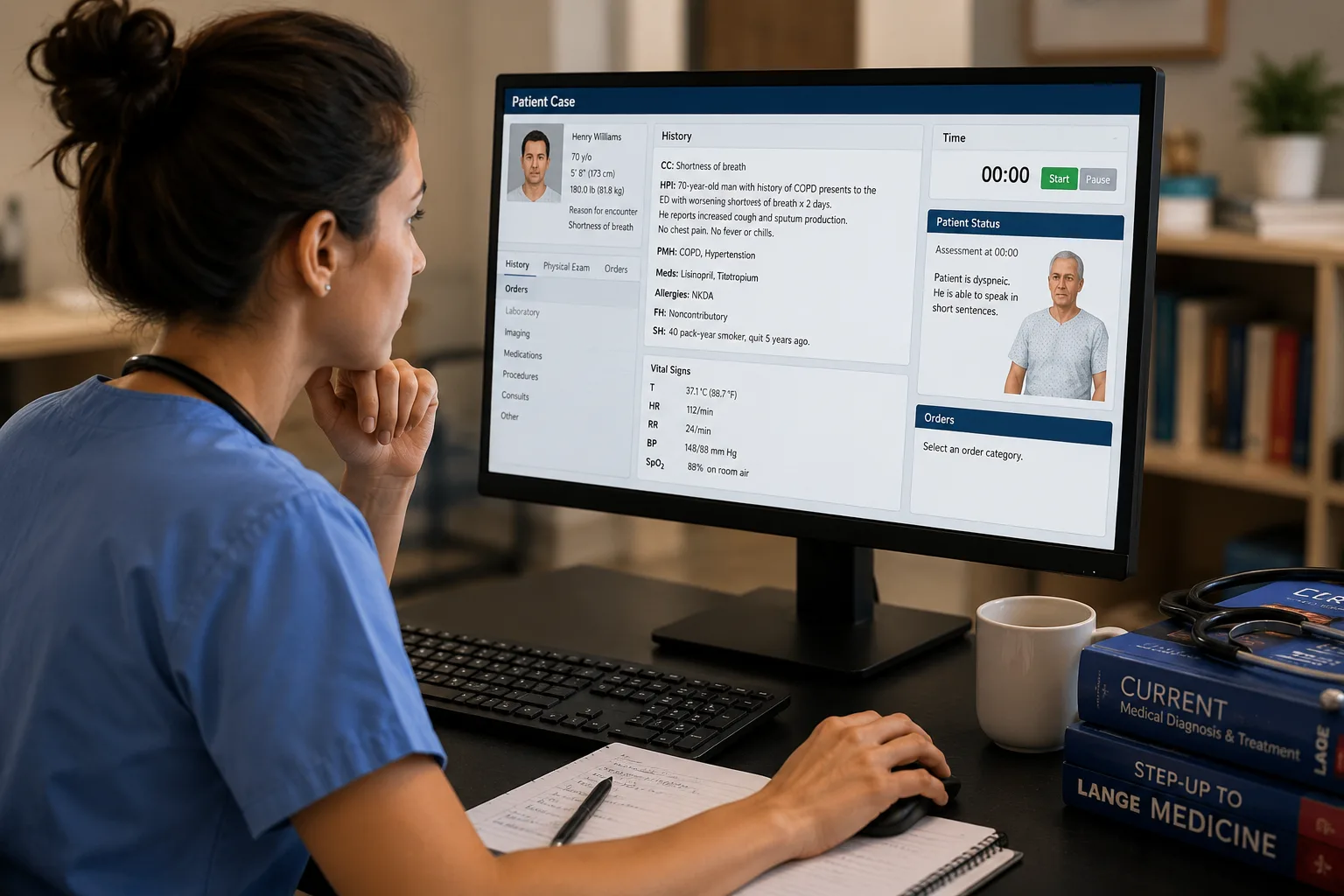
Build an Emergency CCS Reflex Before You Diagnose
The safest way to manage acute presentations on Step 3 CCS is to separate the first minute from the rest of the case.
The safest way to manage acute presentations on Step 3 CCS is to separate the first minute from the rest of the case. In the first minute, you are not trying to prove a rare diagnosis. You are proving that the patient is alive, perfusing, oxygenating, and in the correct setting. The CCS software is dynamic, so simulated time matters. A patient with crushing chest pain, altered mental status, shock, hypoxemia, seizure, stroke symptoms, or severe abdominal pain can worsen while you are waiting for confirmation. Your opening orders should show clinical judgment under uncertainty.
Start with the location. A stable outpatient with mild symptoms can remain in the office while you collect history and send tests. An unstable patient belongs in the emergency department, intensive care unit, operating room, labor and delivery unit, or monitored inpatient setting. The USMLE CCS format is designed to assess diagnosis and management in a simulated clinical environment, not just recall of test names. Therefore, a correct diagnosis entered late after unsafe early management can still feel weak. The exam rewards the sequence of care.
Use a compact emergency reflex: assess airway, breathing, circulation, disability, and exposure; order continuous monitoring when the patient is unstable; treat immediately reversible threats; then narrow the differential. This is not a rote checklist. It is a way to avoid the common CCS error of ordering a long diagnostic panel while ignoring hypoxia, hypotension, or active bleeding. Oxygen is appropriate when the patient is hypoxemic or in respiratory distress. Cardiac monitor, pulse oximetry, two large-bore intravenous lines, isotonic fluids when shock is suspected, bedside glucose for altered mental status, and pregnancy testing in patients who could be pregnant are common high-value actions. Foley catheter may be useful in shock, major trauma, DKA, sepsis, or renal failure when urine output changes management.
The second reflex is to avoid anchoring. Acute presentations often share overlapping first clues. Chest pain can be acute coronary syndrome, pulmonary embolism, aortic dissection, pneumothorax, pericarditis, esophageal rupture, or panic. Altered mental status can be hypoglycemia, sepsis, stroke, intoxication, hypoxia, seizure, hepatic encephalopathy, or intracranial bleeding. Severe headache can be subarachnoid hemorrhage, meningitis, hypertensive emergency, migraine, venous sinus thrombosis, or intracranial mass. In CCS, you do not need to order every test for every possibility, but you must protect the patient from diagnoses that are immediately fatal if missed.
Emergency cases also test whether you reassess after intervention. Do not advance the clock after major orders without checking the patient response. Recheck vitals, focused physical exam, pain, mental status, urine output, oxygen saturation, and relevant labs. If the patient improves, de-escalate logically. If the patient worsens, escalate care and add missing therapy. For example, persistent hypotension after fluids in sepsis should trigger vasopressors and ICU care. Respiratory failure despite noninvasive support should trigger airway management and critical care involvement. Persistent chest pain with ST elevation should trigger emergent reperfusion planning, not another round of low-yield outpatient tests.
Stabilize
ABCs, vitals, monitor, IV access, oxygen when indicated, glucose, fluids, analgesia.
Localize
Chest, neuro, abdomen, endocrine, toxicologic, obstetric, infectious, trauma pattern.
Treat
Give time-sensitive therapy before the confirmatory result when delay is dangerous.
Reassess
Advance time only after documenting response and correcting deterioration.
For Step 3, the best emergency mindset is “diagnose while treating.” That means blood cultures before antibiotics when this does not delay treatment, ECG and troponin while giving aspirin for likely ACS, CT head before thrombolytic treatment in suspected stroke, and potassium measurement before insulin in DKA when possible. You do not win CCS by being aggressive for its own sake. You win by being appropriately urgent.
The First Orders Matrix for Unstable Acute Presentations
A practical order matrix prevents omissions when the case begins with abnormal vitals.
A practical order matrix prevents omissions when the case begins with abnormal vitals. The matrix should be adapted to the scenario, because CCS penalizes unsafe or unnecessary actions. A patient with anaphylaxis needs intramuscular epinephrine immediately. A patient with opioid overdose needs airway support and naloxone. A patient with stroke symptoms needs rapid neuroimaging and glucose testing. A patient with septic shock needs fluids, cultures, antibiotics, lactate, source evaluation, and escalation if hypotension persists. The pattern is consistent: stabilize the physiology that can kill now, then confirm the diagnosis.
The table below is not a command to order everything on every patient. It is a mental guardrail. Emergency scoring improves when your first screen catches the dangerous vital sign and your second screen catches the diagnosis-specific intervention. In the CCS interface, write orders that have a clear purpose. If an order will not change stabilization, diagnosis, treatment, disposition, prevention, or monitoring, it is probably not an emergency order.
| Presentation pattern | Immediate stabilization | Diagnostic anchor | Do not forget |
|---|---|---|---|
| Shock or hypotension | Monitor, two IVs, isotonic crystalloids, oxygen if hypoxemic, Foley if severe | CBC, CMP, lactate, blood cultures if infection possible, ECG, focused imaging | ICU, vasopressors if fluid-refractory, source control |
| Chest pain or dyspnea | Monitor, pulse oximetry, IV access, aspirin if ACS likely, analgesia | ECG, troponin, chest radiograph, targeted PE or dissection testing | Reperfusion for STEMI, avoid anticoagulation in dissection |
| Focal neurologic deficit | Airway if needed, glucose, monitor, stroke team, NPO | Noncontrast head CT, vascular imaging when indicated, coagulation studies | Last known well, thrombolytic eligibility, BP thresholds |
| Severe metabolic illness | IV fluids, monitor, potassium check, treat arrhythmia or coma | Glucose, beta-hydroxybutyrate, BMP, venous pH, osmolality, urinalysis | Do not start insulin in DKA with severe hypokalemia |
| Respiratory failure | Oxygen, bronchodilator or ventilation support as indicated, ICU if severe | ABG or VBG, chest radiograph, ECG, targeted infectious or PE workup | Intubate before exhaustion, treat cause not just saturation |
Several orders are commonly missed because they feel too basic. Pain control matters in renal colic, fractures, myocardial infarction, pancreatitis, and sickle cell crisis. Antiemetics matter when vomiting prevents oral therapy or worsens dehydration. NPO status matters for surgical abdomen, stroke evaluation, impending procedure, altered mental status, and pancreatitis. DVT prophylaxis matters once a critically ill patient is admitted, but it should not replace immediate treatment. Type and screen, crossmatch, and transfusion become high value in active bleeding, ruptured ectopic pregnancy, trauma, gastrointestinal hemorrhage, or symptomatic severe anemia.
The matrix also helps avoid over-testing. For example, a classic opioid overdose with respiratory depression and pinpoint pupils should not wait for a urine drug screen before naloxone. A tension pneumothorax should not wait for chest radiography before decompression. A pulseless patient should not wait for labs before CPR and defibrillation when indicated. CCS cases often contain enough clues to justify action before complete confirmation. Emergency medicine in the simulation is about risk-weighted action.
When practicing, create a personal emergency order set in plain language. Say it out loud for each practice case: “Where is the patient? What is unstable? What kills first? What test confirms it? What treatment cannot wait? When do I reassess?” This routine is especially useful for residents who are clinically experienced but lose points by clicking scattered orders. MDSteps Step 3 practice can help with this skill because live-vitals CCS cases make the patient respond to timed orders, and the readiness dashboard shows whether missed points are coming from delayed stabilization, incomplete monitoring, or weak closure.
Cardiopulmonary Emergencies: Chest Pain, Arrest, and Respiratory Failure
Cardiopulmonary emergencies are high yield because they test both pattern recognition and contraindication awareness.
Cardiopulmonary emergencies are high yield because they test both pattern recognition and contraindication awareness. A patient with crushing substernal pressure, diaphoresis, nausea, radiation to the left arm, or shortness of breath needs rapid ACS management. Place the patient on a monitor, obtain ECG promptly, order troponin, give aspirin unless contraindicated, establish IV access, treat pain, and involve cardiology for reperfusion if ST elevation or equivalent findings are present. High-sensitivity troponin and structured risk assessment are central to contemporary chest pain evaluation, but CCS still rewards immediate recognition of unstable ACS physiology.
The common trap is treating all chest pain as ACS. If the vignette includes tearing pain radiating to the back, pulse deficit, neurologic symptoms, mediastinal widening, or severe hypertension, think aortic dissection. In that setting, anticoagulation can be dangerous. Stabilize with IV access, pain control, blood pressure and heart rate control when appropriate, CT angiography if stable, transesophageal echocardiography if unstable and available, and emergent surgical consultation for type A dissection. If the patient has sudden pleuritic pain, hypoxemia, tachycardia, risk factors for venous thromboembolism, or syncope, consider pulmonary embolism. Order CT pulmonary angiography when stable, anticoagulate when likely and bleeding risk is acceptable, and escalate to thrombolysis or embolectomy in massive PE with shock.
Cardiac arrest is managed by rhythm and pulse, not by exhaustive diagnostic testing. Begin CPR, call for advanced life support, attach defibrillator, give oxygen and airway support, establish IV or intraosseous access, and follow rhythm-based therapy. Ventricular fibrillation and pulseless ventricular tachycardia require defibrillation, CPR, epinephrine, and antiarrhythmic therapy. Pulseless electrical activity and asystole require CPR, epinephrine, and active search for reversible causes. In CCS, the reversible causes can be simulated through orders such as glucose, electrolytes, ECG, bedside ultrasound when relevant, treatment of hyperkalemia, needle decompression for tension pneumothorax, fluids or blood for hypovolemia, and thrombolysis in selected massive PE arrest scenarios.
Respiratory failure requires early decision-making. A patient with severe asthma or COPD exacerbation needs bronchodilators, systemic corticosteroids, oxygen titrated to clinical need, chest radiography if diagnosis is uncertain or complications are possible, and magnesium sulfate for severe asthma. Noninvasive ventilation can be appropriate for COPD exacerbation with hypercapnic respiratory failure when the patient can protect the airway. Intubation is appropriate for altered mental status, inability to protect airway, severe work of breathing, impending exhaustion, refractory hypoxemia, or hemodynamic collapse. Do not spend simulated hours watching a patient tire out.
CCS also tests aftercare. After acute MI stabilization, continue appropriate antiplatelet therapy, anticoagulation when indicated, beta-blocker when not contraindicated, statin therapy, risk factor counseling, and cardiac rehabilitation planning. After asthma or COPD improvement, prescribe inhaler therapy, smoking cessation, vaccination review, trigger education, and follow-up. After PE treatment, evaluate provoking factors and bleeding risk. Emergency management is not complete when the first vital sign improves. The case often ends strongly when you close the loop with disposition, monitoring, prevention, and counseling.
Neurologic and Toxicologic Emergencies: Protect the Brain First
Neurologic emergencies on CCS are dangerous because the diagnostic window is time-sensitive and the differential is broad.
Neurologic emergencies on CCS are dangerous because the diagnostic window is time-sensitive and the differential is broad. For suspected stroke, first check airway, breathing, circulation, glucose, and last known well. Hypoglycemia can mimic stroke and must be corrected immediately. Order noncontrast head CT to exclude hemorrhage, ECG, CBC, CMP, coagulation studies when relevant, troponin, and vascular imaging when large vessel occlusion is suspected. Keep the patient NPO until swallow evaluation. Consult neurology or stroke team early. Reassess neurologic status after imaging and treatment decisions.
Acute ischemic stroke management depends on time, imaging, disability, contraindications, and blood pressure. Current stroke guidance supports IV thrombolysis for eligible adults within the appropriate window and endovascular therapy for selected large vessel occlusions. On CCS, the safest exam logic is not to memorize one drug name alone. Instead, demonstrate that you know the order of decisions: determine onset, exclude hemorrhage, check glucose, assess contraindications, manage blood pressure to the needed threshold, give thrombolytic therapy when eligible, and arrange monitored stroke-unit or ICU care. Avoid antiplatelet or anticoagulant therapy before brain imaging in suspected stroke.
Seizure and status epilepticus require immediate ABCs, lateral positioning, oxygen if hypoxemic, glucose testing, thiamine before glucose when chronic alcohol use or malnutrition is suspected, benzodiazepine therapy for ongoing seizure, and second-line antiseizure medication if seizures persist. Search for causes: electrolytes, pregnancy, toxic ingestion, infection, head trauma, medication nonadherence, alcohol withdrawal, and intracranial bleeding. A common CCS trap is ordering an EEG or CT while an active convulsion continues untreated. Stop the seizure first, then evaluate.
Meningitis and encephalitis require urgent empiric therapy. If the patient has fever, headache, neck stiffness, altered mental status, petechial rash, immunocompromise, or focal neurologic signs, obtain blood cultures and start empiric antimicrobials promptly. Do not delay antibiotics for lumbar puncture if imaging or instability will slow the procedure. Add acyclovir when encephalitis is plausible. Consider dexamethasone in suspected bacterial meningitis when appropriate. Place the patient in the hospital and use isolation precautions when indicated.
Toxicologic cases are often simpler than they appear. Treat toxidromes by physiology. Opioid overdose presents with respiratory depression, altered mental status, and miosis. Support airway and ventilation, give naloxone, monitor for recurrent respiratory depression, and address substance use safety before discharge. Acetaminophen overdose requires level timed to ingestion and N-acetylcysteine when indicated. Salicylate toxicity requires evaluation for acid-base disturbance, activated charcoal in selected early presentations, alkalinization, and dialysis consultation for severe cases. Tricyclic antidepressant overdose with QRS widening requires sodium bicarbonate. Organophosphate poisoning requires decontamination, atropine, and pralidoxime.
For altered mental status, do not anchor too early. Order bedside glucose, oxygen assessment, CBC, CMP, ECG, toxicology when relevant, urinalysis or chest radiograph if infection is possible, CT head if trauma, focal deficits, anticoagulation, severe headache, or unexplained coma. Treat hypoglycemia immediately. Give naloxone when opioid overdose is plausible. Give thiamine before glucose in high-risk malnutrition or alcohol use. Protect the airway when the patient cannot protect it. The scoring principle is clear: protect the brain from hypoxia, hypoglycemia, infection, seizure, and mass effect before chasing rare causes.
Shock, Sepsis, Trauma, and Surgical Abdomen
Shock cases reward rapid recognition of perfusion failure.
Shock cases reward rapid recognition of perfusion failure. The stem may give hypotension, tachycardia, cool extremities, confusion, oliguria, elevated lactate, or respiratory distress. Classify shock while treating it: septic, hypovolemic, cardiogenic, obstructive, or distributive from anaphylaxis or neurogenic injury. Initial actions often include monitored setting, oxygen if needed, IV access, fluids when appropriate, labs, lactate, cultures when infection is suspected, ECG, urine output monitoring, and focused imaging. The next branch depends on response.
Sepsis and septic shock should trigger early antimicrobials, source evaluation, crystalloid resuscitation, lactate measurement, cultures before antibiotics when doing so does not delay therapy, and vasopressors if hypotension persists after fluids. Use broad empiric antibiotics matched to the likely source, local severity, and patient risk. Add source control for abscess, obstructed infected stone, perforation, infected catheter, necrotizing soft tissue infection, or cholangitis. The CCS trap is ordering a culture and waiting. In shock, antibiotics and resuscitation are time-sensitive.
Anaphylaxis is another time-critical diagnosis. The patient may have hypotension, wheezing, urticaria, angioedema, gastrointestinal symptoms, or exposure to food, medication, or insect sting. Give intramuscular epinephrine promptly, place the patient supine if tolerated, give oxygen, IV fluids for hypotension, bronchodilators for bronchospasm, and adjunctive antihistamines or corticosteroids after epinephrine. Observe for recurrence and prescribe an epinephrine autoinjector with avoidance counseling at discharge. Do not lead with diphenhydramine while the airway is swelling.
Trauma cases require primary survey logic. Airway with cervical spine protection, breathing assessment, circulation with hemorrhage control, disability assessment, and exposure are the first priorities. Use two large-bore IVs, type and crossmatch, blood products for hemorrhagic shock, FAST exam, chest radiograph or pelvic radiograph when indicated, CT imaging only when stable enough, tetanus prophylaxis, antibiotics for open fractures or penetrating abdominal injury, and surgical consultation. A hypotensive trauma patient should not be sent away for a long imaging workup before hemorrhage control.
Surgical abdomen cases test whether you recognize peritonitis, perforation, ischemia, obstruction, ruptured ectopic pregnancy, appendicitis with perforation, ovarian torsion, testicular torsion, or abdominal aortic aneurysm. Immediate orders may include NPO, IV fluids, analgesia, antiemetics, CBC, CMP, lipase when relevant, lactate if ischemia or shock is possible, pregnancy test, urinalysis, type and screen, broad antibiotics if perforation or infection is suspected, CT abdomen and pelvis when stable, ultrasound for biliary or pelvic causes, and urgent surgery or gynecology consultation. Pain control does not hide peritonitis in a way that should prevent appropriate care. Treat pain.
Emergency flow for shock
Surgical abdomen clues
- Rigid abdomen, rebound, guarding, or free air
- Severe pain out of proportion, atrial fibrillation, elevated lactate
- Positive pregnancy test with pelvic pain and hypotension
- Sudden flank, back, or abdominal pain in older smoker
- Vomiting, distention, obstipation, or prior abdominal surgery
The disposition matters. Septic shock, major trauma, perforation, mesenteric ischemia, ruptured aneurysm, necrotizing infection, and unstable gastrointestinal bleeding require ICU, OR, interventional radiology, or monitored admission. Stable appendicitis, cholecystitis, pancreatitis, and bowel obstruction still require appropriate admission, NPO status, fluids, analgesia, and specialty involvement. CCS rewards the clinician who does not abandon the patient after making the diagnosis.
Endocrine, Renal, and Obstetric Emergencies
Endocrine emergencies are highly testable because treatment can harm the patient if sequenced incorrectly.
Endocrine emergencies are highly testable because treatment can harm the patient if sequenced incorrectly. In DKA and HHS, start with fluids, monitor vitals, obtain glucose, electrolytes, renal function, ketones, venous pH, osmolality when relevant, urinalysis, ECG, and search for triggers such as infection, myocardial infarction, pancreatitis, pregnancy, medication nonadherence, or steroid use. Insulin is essential, but potassium determines timing. If potassium is dangerously low, replace potassium before insulin because insulin will drive potassium intracellularly and can precipitate lethal arrhythmia. Reassess glucose, anion gap, potassium, mental status, and volume status frequently.
Hypoglycemia is a bedside diagnosis in altered mental status. Give oral glucose if the patient is awake and can swallow. Give IV dextrose if unable to swallow or severely symptomatic. Give glucagon if IV access is unavailable. Search for insulin or sulfonylurea exposure, renal failure, sepsis, adrenal insufficiency, alcohol use, malnutrition, and liver disease. Admit patients with recurrent hypoglycemia, sulfonylurea ingestion, long-acting insulin overdose, or poor social safety.
Thyroid storm presents with fever, tachyarrhythmia, agitation, gastrointestinal symptoms, heart failure, and a trigger such as infection, surgery, trauma, or medication withdrawal. Treat with supportive care, beta blockade when not contraindicated, thionamide, iodine after thionamide, glucocorticoids, cooling, and ICU care. Myxedema coma presents with hypothermia, bradycardia, hyponatremia, hypoventilation, and altered mental status. Treat with thyroid hormone replacement, stress-dose glucocorticoids until adrenal insufficiency is excluded, cautious warming, ventilatory support, and ICU admission.
Renal emergencies often appear through potassium, acid-base status, volume overload, or obstruction. Hyperkalemia with ECG changes requires calcium for membrane stabilization, insulin with glucose, beta agonist therapy, bicarbonate in selected acidemic patients, potassium removal strategies, and dialysis consultation when severe or refractory. Do not wait for the repeat potassium if the ECG shows dangerous changes. Obstructive uropathy with infection needs urgent decompression and antibiotics. Pulmonary edema in renal failure needs oxygen, nitrates if hypertensive and appropriate, diuretics if responsive, and dialysis when refractory or severe.
Obstetric emergencies on Step 3 require attention to both mother and fetus, but maternal stabilization comes first. Ectopic pregnancy should be suspected with pelvic pain, bleeding, positive pregnancy test, syncope, shoulder pain, or hypotension. Order pregnancy test, CBC, type and screen, Rh status, pelvic ultrasound if stable, IV access, fluids or blood if unstable, and urgent gynecology consultation. Do not delay operative management in ruptured ectopic pregnancy. Preeclampsia with severe features or eclampsia requires blood pressure control, magnesium sulfate for seizure prophylaxis or treatment, labs for platelets, creatinine, liver enzymes, urine protein assessment, fetal assessment when viable, and obstetric management. Delivery is definitive in severe disease at appropriate gestational thresholds or when maternal or fetal condition demands it.
Postpartum hemorrhage requires uterine massage, IV access, fluids, blood products when needed, oxytocin, additional uterotonics based on contraindications, tranexamic acid when appropriate, evaluation for retained products, laceration, uterine inversion, coagulopathy, and urgent obstetric involvement. Shoulder dystocia, placental abruption, and cord prolapse are less common but high-risk. In CCS, the principle is to recognize the emergency, call the right team, and order maternal stabilization while addressing the obstetric cause.
CCS Scoring Traps in Acute Cases
Many residents know the medicine but lose CCS points through simulation behavior.
Many residents know the medicine but lose CCS points through simulation behavior. The first trap is delayed treatment. If the patient is unstable, do not wait for every lab before starting resuscitation. A septic patient needs fluids and antibiotics. Anaphylaxis needs epinephrine. Status epilepticus needs benzodiazepines. STEMI needs reperfusion planning. Tension pneumothorax needs decompression. The exam is not only asking what the diagnosis is. It is asking whether your patient survives long enough for the diagnosis to matter.
The second trap is failure to reassess. After fluids, recheck blood pressure, heart rate, respiratory status, urine output, and mental status. After bronchodilators, recheck work of breathing, oxygen saturation, and peak flow if appropriate. After insulin in DKA, recheck glucose, potassium, bicarbonate, and anion gap. After naloxone, monitor for recurrent respiratory depression. After thrombolysis or anticoagulation, monitor for bleeding and neurologic changes. Advancing the clock without reassessment is a simulation-specific error that feels unlike real clinical workflow but matters on the exam.
The third trap is poor disposition. A patient who improved after an emergency intervention may still need monitored admission. Examples include DKA, sepsis, pulmonary embolism, ACS, stroke, anaphylaxis after severe symptoms, overdose requiring repeated naloxone, gastrointestinal bleeding, and severe asthma. Discharging too early is unsafe. Conversely, admitting every minor complaint to ICU is not thoughtful care. Choose the level of care based on severity, instability, procedure need, monitoring need, and social safety.
The fourth trap is contraindication blindness. Aspirin and anticoagulation help ACS but can harm aortic dissection or active intracranial hemorrhage. Thrombolysis can help eligible ischemic stroke but requires imaging and contraindication review. Insulin helps DKA but can worsen severe hypokalemia. Beta blockers help some aortic dissections and thyroid storm but can worsen severe asthma, decompensated heart failure, bradycardia, or cocaine-associated vasospasm depending on context. Fluids help hypovolemic and septic shock but can worsen pulmonary edema in cardiogenic shock. CCS rewards targeted treatment, not reflexive bundles applied without judgment.
The fifth trap is neglecting prevention and counseling after the acute phase. Once the patient stabilizes, add smoking cessation, medication adherence counseling, diabetes education, anticoagulation counseling, return precautions, vaccination when appropriate, substance use treatment referral, fall prevention, diet advice, or follow-up. These are not the first orders in a crashing patient, but they often strengthen the ending of a case. The skill is timing: stabilize first, then close comprehensively.
| Trap | What it looks like | Safer CCS behavior |
|---|---|---|
| Diagnostic delay | Ordering extensive labs before treating shock | Start resuscitation and diagnosis together |
| Contraindication error | Anticoagulating suspected dissection | Use red flags to pause harmful default orders |
| No reassessment | Advancing hours after insulin, fluids, or naloxone | Recheck vitals, focused exam, and key labs |
| Wrong location | Managing respiratory failure in clinic | Move to ED, ICU, OR, or monitored unit early |
| Incomplete closure | Stopping after the acute diagnosis | Add disposition, prevention, counseling, and follow-up |
Practice should therefore focus on order timing rather than passive reading. Run cases in timed mode. Pause after the first screen and write the first five actions before clicking. Then compare your planned sequence with the patient response. MDSteps can support this by combining an Adaptive QBank with over 9000 questions, timed live-vitals CCS practice, automatic flashcard decks from missed concepts exportable to Anki, and an exam-readiness dashboard. Use those analytics to identify whether your misses are knowledge gaps, sequencing errors, or reassessment failures.
Rapid-Review Checklist for Emergency CCS Cases
Use this checklist during your final week and before each CCS practice block.
Use this checklist during your final week and before each CCS practice block. It is designed for speed. The goal is not to replace clinical reasoning. The goal is to keep essential emergency actions available when time pressure makes you vulnerable to omissions.
First 60 seconds
- Confirm setting: clinic, ED, ICU, OR, labor unit, ward.
- Check ABCs, vitals, mental status, oxygen saturation.
- Place monitor, IV access, pulse oximetry when unstable.
- Give oxygen for hypoxemia or respiratory distress.
- Check bedside glucose for altered mental status or neurologic deficit.
Time-sensitive treatments
- Epinephrine for anaphylaxis.
- Naloxone for opioid respiratory depression.
- Benzodiazepine for active seizure.
- Aspirin and reperfusion pathway for likely STEMI.
- Fluids, cultures, antibiotics, and source control for sepsis.
- Insulin after potassium assessment in DKA.
For chest pain, obtain ECG and troponin, but never forget the dangerous mimics. For neurologic symptoms, check glucose and obtain CT head before thrombolysis decisions. For shock, classify the likely mechanism while starting resuscitation. For abdominal pain, identify peritonitis, ischemia, pregnancy-related emergencies, obstruction, and rupture. For respiratory failure, decide early whether noninvasive ventilation is safe or intubation is needed. For obstetric emergencies, stabilize the mother, involve obstetrics, and assess fetal status when appropriate.
Before advancing simulated time, ask five questions. Did I treat the immediate threat? Did I order the confirmatory test? Did I avoid contraindicated therapy? Did I choose the correct location? Did I schedule reassessment? This five-question pause prevents many CCS errors. It is also the fastest way to convert clinical knowledge into exam performance.
At case closure, add what is appropriate for the patient’s final state. That may include admission orders, serial labs, repeat ECG, repeat neurologic checks, consultation, procedure planning, diet status, DVT prophylaxis, pain control, patient education, medication reconciliation, smoking cessation, vaccination review, return precautions, or follow-up. Do not add preventive counseling before stabilizing a crashing patient, but do not forget it once the emergency is controlled.
The strongest Step 3 CCS emergency performance comes from a calm sequence: stabilize, localize, treat, reassess, and close. Acute cases feel unpredictable because the chief complaint is dramatic. The underlying scoring logic is predictable. The simulation wants to see that you can practice independently: recognize danger, act before deterioration, use evidence-based interventions, monitor response, and transition the patient safely. If your practice cases are built around that sequence, emergencies become a structured exercise instead of a guessing game.
For more Step 3 preparation, review MDSteps Step 3 resources and practice interactive scenarios through MDSteps CCS cases. The best use of any platform is deliberate repetition: pick one emergency pattern, run it under time pressure, write down the missed stabilization step, and repeat until the sequence becomes automatic.
References
- United States Medical Licensing Examination. Computer-based Case Simulations.
- United States Medical Licensing Examination. Step 3 Formats and Questions.
- American Heart Association. CPR and Emergency Cardiovascular Care Guidelines.
- Evans L, Rhodes A, Alhazzani W, et al. Surviving Sepsis Campaign: International Guidelines for Management of Sepsis and Septic Shock 2021.
- Gulati M, Levy PD, Mukherjee D, et al. 2021 AHA/ACC Guideline for the Evaluation and Diagnosis of Chest Pain.
- American Heart Association/American Stroke Association. 2026 Guideline for the Early Management of Patients With Acute Ischemic Stroke.
- Umpierrez GE, Davis GM, ElSayed NA, et al. Hyperglycemic Crises in Adults With Diabetes: A Consensus Report.
- American College of Emergency Physicians. Clinical Policies.
CCS is not just what you order. It is when you order, reassess, and close the case.
MDSteps helps you practice live CCS cases with vitals, orders, labs, time advancement, reassessment, closure, and after-action feedback.
Full access includes Step 1, Step 2 CK, Step 3, CCS cases, analytics, auto-flashcards, and study planning.